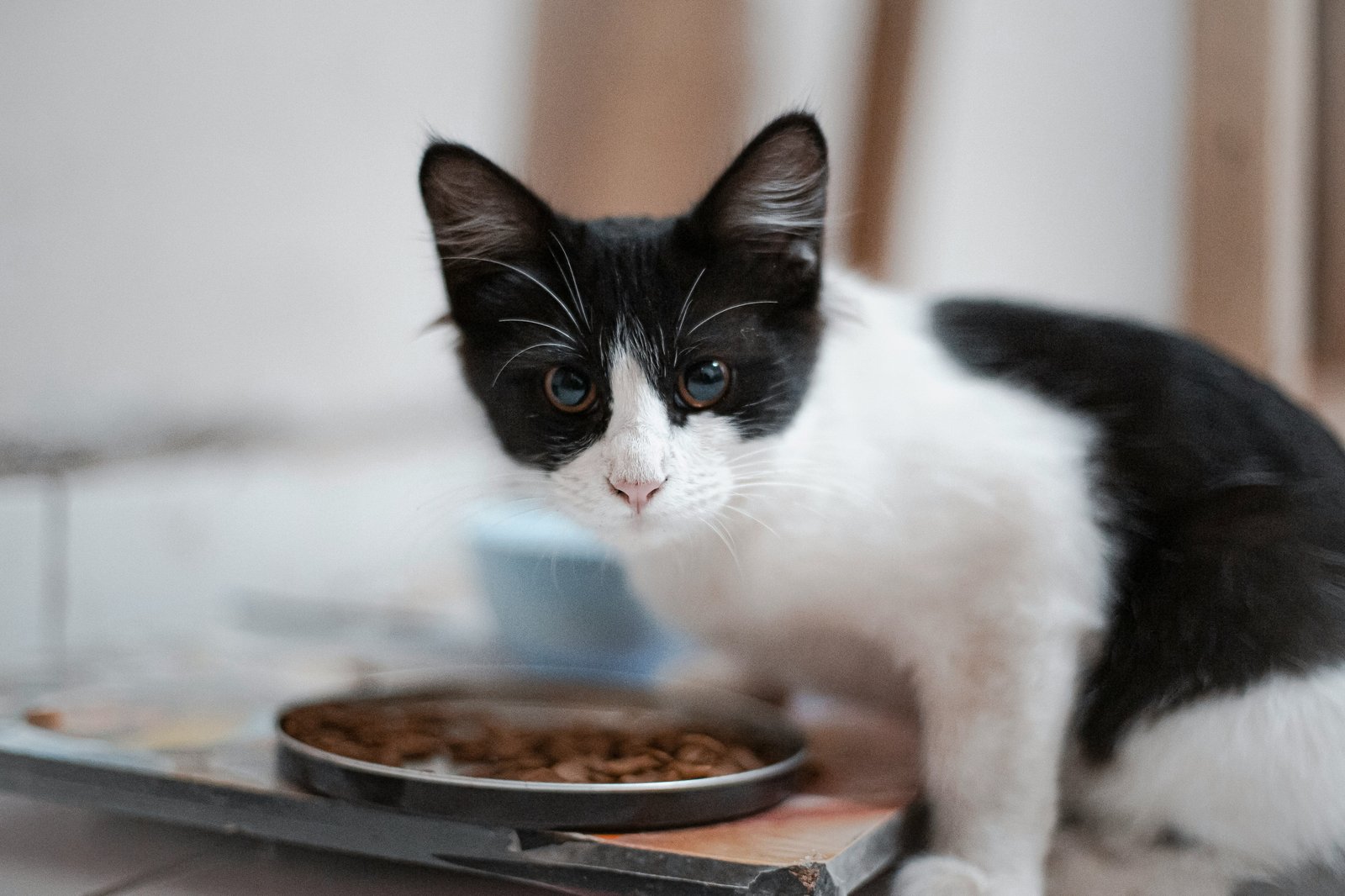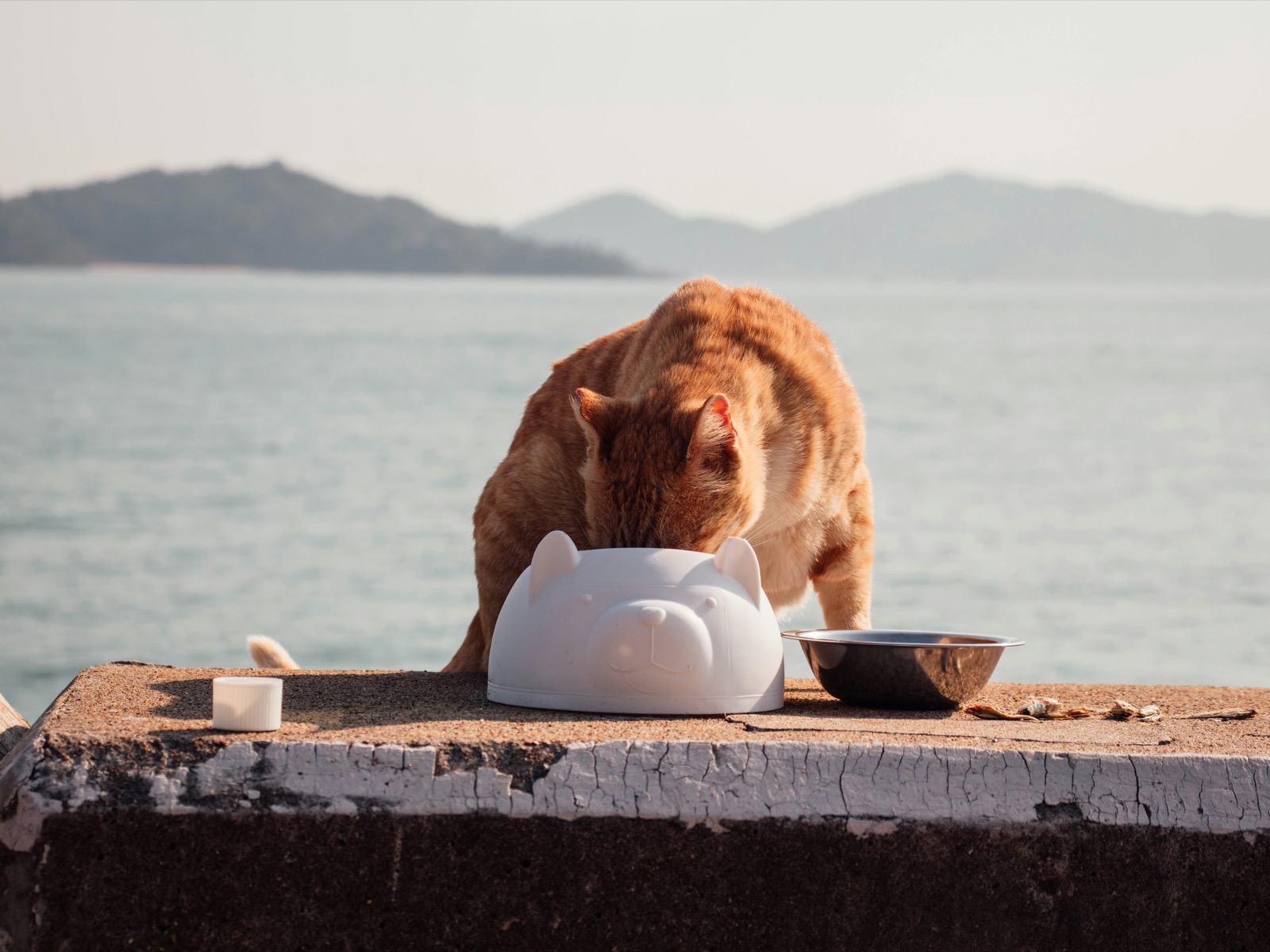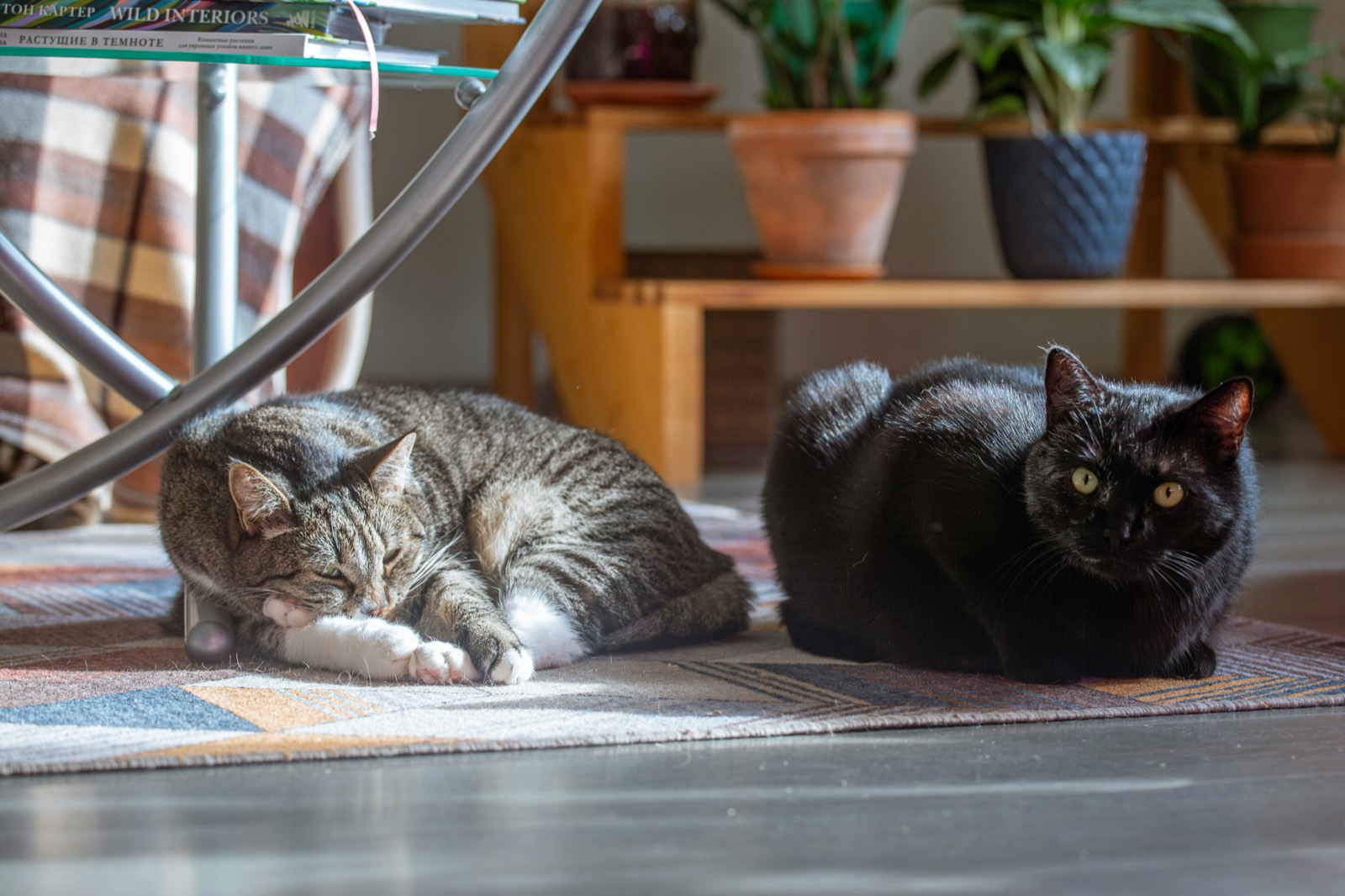
In a multi-cat home, the bowl is often the battlefield. One cat inhales their own meal and then shoulders the other cat away from theirs. A cat on a prescription kidney diet keeps losing meals to a healthy housemate. Or a slow, anxious eater never finishes because a bolder cat patrols the kitchen. A microchip cat feeder solves this in a way no ordinary bowl can: it reads your cat’s implanted microchip (or an RFID collar tag) and opens only for that cat.
After comparing the current models against access control reliability, food compatibility, and long-term owner feedback, our top pick for most homes is the SureFeed Microchip Pet Feeder — the proven default with the largest owner base. If you want feeding data and portion tracking, the SureFeed Microchip Pet Feeder Connect adds app-based monitoring via a hub. And if your food thief has learned to sneak in from behind while the registered cat is eating, the fully enclosed Closer Pets MiBowl closes that loophole.
A note on ratings and prices: The star ratings, review counts, and prices below are snapshots pulled from live Amazon listings at the time of writing (July 2026). Listings change daily — always check the current price, rating, and seller before buying.
Why Trust The Caring Pet
This guide combines manufacturer specifications, veterinary feeding guidance, and patterns from long-term owner reviews across retailers and cat forums. It is not a controlled laboratory test — we did not run RFID read-range trials or durability cycles ourselves. Instead, we looked for consistent, repeated patterns in what owners report after months of daily use, and cross-checked those patterns against the manufacturers’ own documentation.
This article contains affiliate links. If you buy through one of them, we may earn a small commission at no extra cost to you. Our picks are chosen independently, and brands do not pay for placement. Because we earn from qualifying purchases, we are extra careful to state downsides plainly — you will find them in every review below.
Do You Actually Need a Microchip Feeder?
A microchip feeder is a specialized tool. It is worth the money when one of these is true:
- Food stealing. One cat routinely eats the other’s meal. Owners often describe the moment they realize the “picky” cat is not picky — they are just never allowed to finish.
- Prescription diets. A cat on a veterinary diet (kidney, urinary, diabetic, hypoallergenic) must be the only mouth in that bowl. This is the use case we see most often in owner forums — including cats undergoing cancer treatment whose medicated or high-calorie meals were being stolen by healthy siblings.
- Weight management. One cat needs calorie restriction while the other does not, making free-feeding impossible.
- Multi-pet chaos. Dogs that raid the cat’s bowl count too — a microchip feeder opens for the cat, not the dog.
If none of these apply and you simply want scheduled meals while you are at work, a regular automatic cat feeder is cheaper and more appropriate. Microchip feeders control access, not timing (with one app-assisted exception below).
How We Chose
We scored every candidate on five criteria, based on owner reports, manuals, and retailer data:
- Access reliability. Does it open for the right cat, every time? We favored models with consistent microchip read performance and low false-open rates.
- Theft-proofing. Can a determined thief reach in from the sides or back? Some cats learn to.
- Food compatibility. Wet, dry, raw — and whether the design keeps wet food covered between meals.
- Microchip vs. collar tag. All picks work with implanted ISO microchips and include (or support) an RFID collar tag for non-chipped cats.
- Cleaning and daily living. Removable, washable bowls; battery life; noise levels that won’t scare a nervous cat.
The 3 Best Microchip Cat Feeders of 2026
 Top Pick
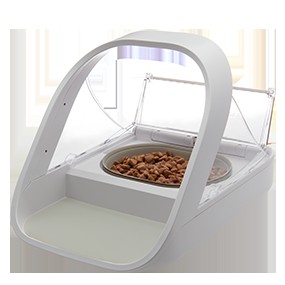
SureFeed Microchip Pet Feeder
Best For: Most multi-cat homes, prescription diets, wet & dry food
Material: Plastic housing, sealed lid, removable bowls
Capacity: 400 ml / ~1.7 cups
What We Like
- Opens only for the registered cat's microchip or RFID tag
- Works with wet, dry, or raw food
- Stores up to 32 pet IDs
- Step-by-step training mode for cautious cats
- Sealed lid keeps food covered and deters flies
What We Don't Like
- Open back — a determined thief can sneak in while the registered cat eats
- Not a timed feeder (access control only)
- Runs on 4 C-cell batteries
- Bowl is small for large appetites
The SureFeed Microchip Pet Feeder is the product that defined this category, and with more than 13,000 ratings it has the deepest pool of long-term owner feedback. When your registered cat approaches, the lid slides open; when they walk away, it closes over the food. Setup is a one-button pairing process, and the training mode opens the lid in gradual stages so a cautious cat can get used to the motion over several days.
In practice, the SureFeed solves food stealing for the large majority of homes, and it handles wet food gracefully — the sealed lid keeps the portion covered between visits, which slows drying and keeps flies off. It works with your cat’s existing implanted microchip, and an RFID collar tag is included for cats without a chip.
Its one real weakness is geometry: the back and sides are open. Most cats give up when the lid stays shut, but a small share of determined thieves learn to shoulder in from behind while the registered cat is eating. If you already know your thief is that persistent, look at the fully enclosed MiBowl below. Also note this is access control, not scheduling — it will not dispense meals at set times, and it runs on four C-cell batteries rather than a wall plug.
 Best Enclosed Design
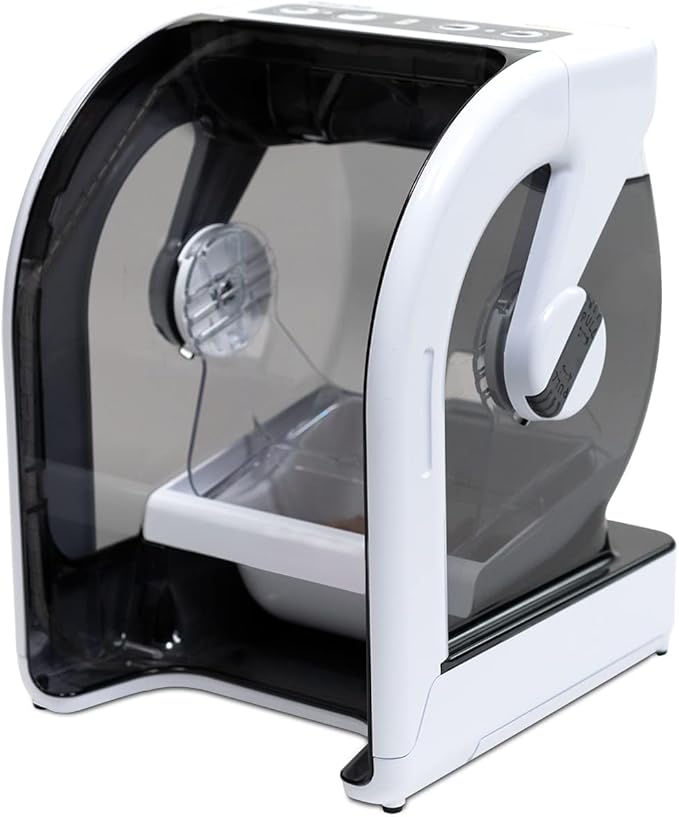
Closer Pets MiBowl Microchip Feeder (CP500)
Best For: Persistent food thieves, side/back sneaks, wet food
Material: BPA- and BHT-free plastic, fully enclosed design
Capacity: Fits cats and small-to-medium dogs
What We Like
- Fully enclosed — no side or back access for thieves
- Reads implanted ISO microchips; ID disc included
- Pairs up to 10 pets
- Quiet lid motion suits nervous cats
- Removable, dishwasher-safe bowl
What We Don't Like
- Significantly more expensive than the SureFeed
- Plastic bowl at this price (stainless insert sold separately)
- Slight lid open/close delay can confuse some cats
- 4 C batteries not included
The Closer Pets MiBowl is the answer to the SureFeed’s one loophole. Its feeding chamber is enclosed on all sides, so the food is physically unreachable unless the lid is open for the registered pet. Owners who switched from the SureFeed specifically because a greedy cat had learned the back-door trick consistently report that the MiBowl ended the theft for good.
The MiBowl reads standard implanted microchips (no collar required) and ships with an ID disc tag as a backup — some owners find the disc reads a touch more reliably than an implanted chip, since collar position is predictable. It stores up to 10 pet identities, the lid action is quiet enough not to spook cautious cats, and the bowl lifts out for the dishwasher.
The trade-offs are price and finish. At roughly $270 on the U.S. listing at the time of writing, it costs nearly twice the SureFeed, yet the included bowl is plastic — a stainless steel insert exists but is sold separately. A few owners also note a slight delay as the lid opens, which can confuse a cat for the first week or two. If your thief is truly relentless, the premium buys you the only design they cannot outsmart; if they are not, the SureFeed is the better value.
 Best with App Tracking
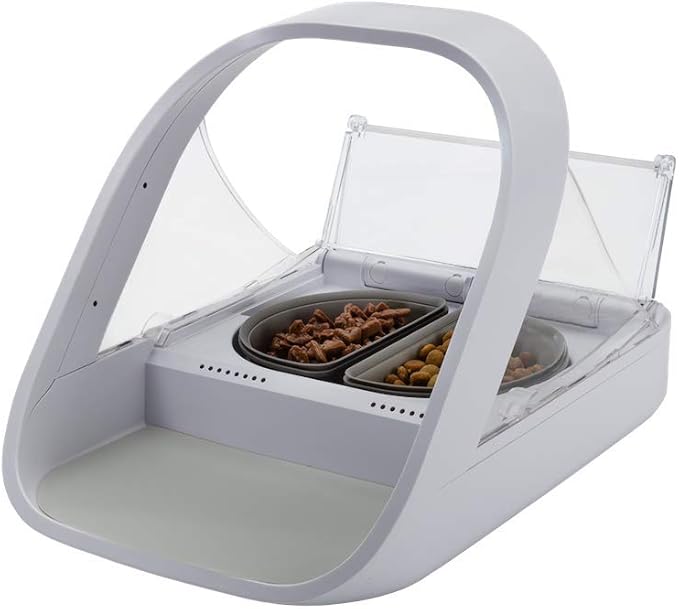
SureFeed Microchip Pet Feeder Connect
Best For: Health monitoring, portion tracking, data-minded owners
Material: Plastic housing with integrated weighing scales
Capacity: 400 ml / ~1.7 cups
What We Like
- Integrated scales accurate to 1 g with LED portion guide
- App tracks when, how often, and how much each pet eats
- Eating-behavior alerts can flag illness early
- Same proven microchip access control as the standard SureFeed
- 3-year warranty via app registration
What We Don't Like
- Requires the Sure Petcare Hub — sold separately or in a bundle
- Total cost approaches $300+
- Hub needs an ethernet connection to your router
- Same open-back geometry as the standard model
The SureFeed Microchip Pet Feeder Connect takes the standard SureFeed and adds two things: integrated scales accurate to one gram, and a connection to the Sure Petcare app (via the required Hub, which plugs into your router with an ethernet cable). The LED guide on the feeder lights up as you pour, so you hit the exact portion your vet prescribed. The app then logs every visit — which pet ate, when, and how much.
That data is more than a gimmick. A change in eating pattern is one of the earliest signs of illness in cats, and owners of senior cats and cats with chronic conditions use the Connect’s appetite history as an early-warning system — and as concrete numbers to bring to the vet. For a cat on a prescription diet, the combination of “only this cat can eat” plus “here is exactly how much this cat ate” is uniquely valuable.
Be clear-eyed about the cost structure: the feeder alone runs about $270, the Hub is roughly $85 more unless you buy a bundle, and each additional cat on restricted access needs their own feeder. Like the standard model, it is battery-powered (4 C cells, roughly six months of life) and has the same open-back geometry. Buy it for the portion precision and health tracking — not as a theft-proofing upgrade over the base model.
Side-by-Side Comparison
| SureFeed Microchip Pet Feeder | Closer Pets MiBowl | SureFeed Feeder Connect | |
|---|---|---|---|
| Price (snapshot) | ~$140 | ~$269 | ~$270 + ~$85 hub |
| Rating (snapshot) | 4.2 ★ (13,100+) | 4.2 ★ (570+) | 4.2 ★ (940+) |
| Access control | Microchip or RFID tag | Microchip or ID disc | Microchip or RFID tag |
| Enclosed against back/side theft | No | Yes | No |
| Wet food friendly | Yes (sealed lid) | Yes (enclosed) | Yes (sealed lid) |
| Portion scales | No | No | Yes (1 g accuracy) |
| App / eating history | No | No | Yes (via Hub) |
| Pet IDs stored | 32 | 10 | 32 |
| Power | 4 × C batteries | 4 × C batteries | 4 × C batteries |
| Best for | Most homes | Persistent thieves | Health monitoring |
Microchip vs. Collar Tag: Which Should You Use?
All three feeders work two ways: reading your cat’s implanted microchip, or reading an RFID tag on the collar. Which is better?
- Implanted chip is our default recommendation. There is nothing to lose, nothing to catch on furniture, and no collar required. One caveat: a chip implanted between the shoulder blades occasionally migrates, and the feeder reads best when the cat’s neck is over the sensor arch. If your cat’s chip reads inconsistently, try the collar tag before assuming the feeder is faulty.
- Collar tag reads more predictably because its position is fixed — but it requires your cat to tolerate a collar (always a breakaway style for safety), and tags can be lost outdoors.
If your cat is not microchipped at all, the included tag gets you started today — but consider asking your vet about chipping at the next visit. It is inexpensive, and it protects your cat in far more situations than feeding.
A Note on Wet Food
All three picks are popular specifically because they handle wet food — something most timed dispensers cannot. But no microchip feeder refrigerates. The sealed lid on the SureFeed models and the enclosed chamber on the MiBowl keep food covered and slow drying; they do not extend safe holding time. Follow standard food-safety limits: wet food should not sit at room temperature beyond 2 hours (or 1 hour above 90°F / 32°C). If you need multi-day wet-food scheduling, look at the refrigerated feeder in our automatic feeder guide instead.
Setting Up for Success
Whichever model you choose, two habits make the difference:
- Use the training mode. Every cautious-cat failure story starts with skipping it. Let the lid move in stages over several days while your cat eats undisturbed.
- Place it thoughtfully. Give the registered cat a clear approach path, and if you run two feeders, face them away from each other so neither cat can hover behind the other’s bowl. A new cat checklist principle applies here too: resource placement shapes behavior more than gadgets do.
Frequently Asked Questions
Frequently Asked Questions
How does a microchip cat feeder work?
A microchip cat feeder has a sensor in the arch over the bowl that reads your cat's implanted microchip (or an RFID collar tag) as they approach. The lid opens only for registered IDs and closes when the cat leaves, so other pets cannot access the food. All three feeders in this guide store between 10 and 32 pet identities and include a collar tag option for cats without a chip.
Will a microchip feeder work with my cat's existing chip?
In most cases, yes — the SureFeed and MiBowl read standard ISO (15-digit) microchips, which covers the vast majority of chipped cats in the U.S. If your cat's chip has migrated from the shoulder area, reads can become inconsistent; in that case the included RFID collar tag is a reliable fallback. Your vet can confirm your cat's chip type in seconds with a scanner.
Can another cat still steal food from a microchip feeder?
It depends on the design. The SureFeed models close when the registered cat leaves, but their backs and sides are open — a small share of determined cats learn to sneak in from behind while the registered cat is still eating. The Closer Pets MiBowl is fully enclosed, which eliminates that loophole. If you already know your food thief is persistent, the enclosed design is the safer bet.
Do microchip feeders work for wet food?
Yes — wet food compatibility is one of their main advantages over timed dispensers. The sealed lid (SureFeed) or enclosed chamber (MiBowl) keeps food covered between visits. However, no microchip feeder refrigerates: wet food should not sit out beyond 2 hours at room temperature (1 hour above 90°F). For multi-day wet-food scheduling, a refrigerated feeder is the right tool.
Is a microchip feeder worth it for one cat?
Usually not — a single cat with no food thief and no prescription diet gains little from access control, and a regular automatic feeder is cheaper for scheduling. The exception is a one-cat home with a dog or toddler who raids the bowl, or a cat whose intake you need to track precisely for medical reasons (the SureFeed Connect's scales and app history).
What's the difference between the SureFeed and the SureFeed Connect?
The Connect adds integrated 1-gram scales with an LED portion guide and app-based tracking via the required Sure Petcare Hub (sold separately, ~$85). The app logs which pet ate, when, and how much — useful for prescription portions and early illness detection. The access-control mechanism, bowl size, battery power, and open-back design are the same as the standard SureFeed.
The Bottom Line
For most multi-cat homes, the SureFeed Microchip Pet Feeder is the right answer: proven, wet-food friendly, and the best value in the category. If your food thief has already defeated an open-back feeder, the MiBowl’s fully enclosed design is the one they cannot beat. And if you are managing a prescription diet or want appetite data that could flag illness early, the SureFeed Connect earns its premium — hub and all.
Feeding dynamics are one piece of a calmer multi-cat home. For the broader picture, see our guides to automatic cat feeders and the first 30 days with a new cat, or browse all our best picks.
References
- Sure Petcare. “Microchip Pet Feeder” and “Microchip Pet Feeder Connect” product documentation. https://www.surepetcare.com/en-us/pet-feeder/microchip-pet-feeder-connect
- Closer Pets. “MiBowl Automatic Selective Microchip Pet Feeder (CP500).” https://closerpets.com/products/mibowl-microchip-pet-feeder
- Amazon.com product listings (ratings, review counts, and prices as of July 2026): SureFeed Microchip Pet Feeder (B00O0UIPTY), SureFeed Microchip Pet Feeder Connect (B07RHZHHGN), Closer Pets MiBowl CP500 (B09ZLJCYSR)
- Owner discussions on selective feeding and prescription-diet management, Reddit (r/cats, r/CatAdvice, r/BuyItForLife), 2025–2026