
Halloween is the single most candy-dense night of the year in your home. Bowls of chocolate sit at kid-height by the front door. Treat bags are dumped on living-room floors and picked through by toddlers who drop half of what they grab. Gum and sugar-free candy ride in coat pockets at exactly nose height for a dog. And the doorbell rings every ninety seconds, which means your pet is loose, excited, and unsupervised in the exact room where all of this is happening.
It is not a theoretical risk. The ASPCA Animal Poison Control Center lists chocolate and candy as the top pet poison call drivers around Halloween, and the pattern repeats every year: a large-breed dog eats a bowlful of candy and is fine, while a ten-pound terrier gets seriously ill from three pieces of dark chocolate. The difference is not luck — it is the type of candy, the amount, and the weight of the animal.
This guide ranks the Halloween dangers by how likely they are to actually hurt your pet, gives you the weight-and-amount math for chocolate (the one toxin you can roughly calculate at home), and walks through exactly what to do in the first thirty minutes after you discover a shredded wrapper.
If your pet has already eaten candy — call a veterinarian or a poison hotline now, before symptoms start. In the U.S., the ASPCA Animal Poison Control Center (888-426-4435) and Pet Poison Helpline (855-764-7661) are staffed 24/7, even on Halloween night. If you are not sure whether what they ate counts as an emergency, our Pet Poison Triage wizard sorts red-flag symptoms in under a minute.
The Quick-Reference Danger Table
Before the details, here is the ranking. “Fast” means symptoms can begin within the hour — those are the ones where you call first and read this article second.
| Halloween item | Toxic ingredient | Danger level | How fast it hits | First move |
|---|---|---|---|---|
| Dark / baking chocolate | Theobromine + caffeine | Severe | 2–12 hours | Call vet or hotline immediately |
| Sugar-free gum & candy | Xylitol | Severe (dogs) | 30–60 minutes | Call vet or hotline immediately |
| Chocolate-covered raisins | Theobromine and a kidney toxin | Severe (double hazard) | Hours | Call vet or hotline immediately |
| Any raisins / grape candy | Unknown kidney toxin | Severe (dogs) | Hours | Call vet or hotline immediately |
| Cannabis edibles | THC | Severe | 30 min–3 hours | Call vet — be honest about what it was |
| Candy wrappers & foil | Physical obstruction | Moderate to severe | Hours to days | Call vet if vomiting or no appetite |
| Macadamia-nut chocolates | Unknown toxin + theobromine | Moderate to severe | 6–24 hours | Call vet or hotline |
| Candy corn, hard candy | Sugar only | Low (GI upset in quantity) | Hours | Watch; call if vomiting persists |
| Caramel apples | Sugar, sticks | Low to moderate | — | Watch for swallowed stick; call if gagging |
| Glow sticks / glow jewelry | Phenol (bitter liquid) | Low (cats) | Minutes (drooling) | Rinse mouth; usually self-resolving |
One pattern worth internalizing: the deadliest items on this list are not the ones that look scary. Candy corn — pure sugar — is nearly harmless. The killers are the small, innocent-looking things: two pieces of 90% dark chocolate, a pack of sugar-free gum, a mini-box of raisins.
Chocolate: The One You Can Actually Calculate
Chocolate is the classic Halloween emergency, and the only one where a rough at-home calculation is possible. The toxic principle is theobromine, a caffeine relative that dogs and cats metabolize far more slowly than we do. It accumulates, overstimulates the heart and nervous system, and in serious cases causes tremors, seizures, and fatal heart arrhythmias. The full species-by-species breakdown is in our Chocolate toxin entry.
Three variables decide whether a chocolate exposure is an emergency: the darkness of the chocolate, the amount eaten, and your pet’s weight.
Theobromine content by chocolate type (approximate, per ounce / 28 g, per the Merck Veterinary Manual):
| Chocolate type | Theobromine per oz | What that means |
|---|---|---|
| White chocolate | ~0.25 mg | Theobromine-free in practice; mostly a fat/sugar stomach risk |
| Milk chocolate | ~44–58 mg | Dangerous in larger amounts, especially for small dogs |
| Dark / semi-sweet (50–70%) | ~130–160 mg | A few pieces can sicken a small dog |
| Baking chocolate, cocoa powder | ~400–800 mg | A single square can be an emergency for a dog under 20 lb |
The thresholds veterinary toxicology uses: mild signs (vomiting, restlessness, a racing heart) begin around 20 mg of theobromine per kg of body weight, and tremors and seizures become possible around 40–50 mg/kg.
Put that in real terms:
- A 75 lb Labrador eats the whole bowl of milk chocolate Snickers minis (say 10 oz of chocolate). He ingests roughly 500 mg of theobromine against 34 kg of body weight — about 15 mg/kg. Likely outcome: vomiting, diarrhea, one miserable night, and a vet call anyway to confirm.
- A 12 lb terrier eats two squares of 70% dark chocolate (about 1 oz). That is roughly 150 mg against 5.5 kg — about 27 mg/kg, past the symptom threshold for a dog a quarter her size. That is a same-hour call to the vet or poison hotline.
The rule of thumb: severe poisoning territory for milk chocolate starts around one ounce per pound of body weight — and dark chocolate gets there at roughly a tenth of that. When in doubt, treat it as dark chocolate and call.
Symptoms typically start within 2 to 12 hours: vomiting, diarrhea, restlessness, panting, a racing heart, then tremors. Do not wait for symptoms to appear before calling — decontamination (inducing vomiting, activated charcoal) works best early, and it must be done under veterinary guidance.
Xylitol: The Most Dangerous Thing in a Coat Pocket
If chocolate is the best-known Halloween hazard, xylitol is the most underestimated one. It is a sugar substitute used in sugar-free gum, mints, and increasingly in “healthy” and keto candy — the exact candies adults hand out so kids’ parents “won’t hate them.” To a dog, it is genuinely dangerous.
In dogs, xylitol triggers a massive insulin release. Blood sugar can crash within 30 to 60 minutes of eating even a small amount — the commonly cited danger threshold is on the order of 0.1 gram per kg of body weight, which a single piece of some gum brands can approach for a small dog. Weakness, staggering, and seizures follow. Higher doses can then cause acute liver failure over the following hours to days. Our full Xylitol toxin entry covers the mechanism and the product list.
Two things make xylitol exposures treacherous:
- The window is short. A dog can go from normal to seizing inside an hour. If you find a chewed pack of sugar-free gum, call before you clean up.
- Do not induce vomiting on your own. Unlike chocolate, making a xylitol dog vomit without professional guidance can drop blood sugar faster. Call first; the hotline or vet will tell you what to do, and may have you rub honey or corn syrup on the gums if hypoglycemia starts before you reach them.
Cats appear somewhat less sensitive to xylitol than dogs, but it is still considered risky for them — the answer to “my cat ate sugar-free gum” is the same phone call.
Chocolate-Covered Raisins: The Double Hazard
The mini-box of raisins — the treat every kid trades away — deserves special mention because it combines two severe toxins in one piece. Chocolate brings theobromine; raisins bring an as-yet-unidentified toxin that can cause acute kidney failure in dogs.
The raisin problem is that the dose-response is wildly unpredictable. Some dogs eat a pound of grapes and are fine; others develop kidney failure from a small handful. Veterinary toxicology has never isolated the toxin or a safe threshold, which is why the standing guidance is blunt: any ingestion of grapes or raisins by a dog warrants a call, with no “wait and see” period. Early signs are vomiting (often within hours), then lethargy, increased thirst, and decreased urination as the kidneys struggle. The full profile is in our Grapes & Raisins toxin entry.
So a chocolate-covered raisin is simultaneously a chocolate exposure and a grape exposure — and the two have different treatments and timelines. If your dog eats them, tell the hotline or vet both facts, not just “he ate chocolate.”
The Overlooked Hazards
Candy wrappers and foil
A dog who raids a treat bowl swallows the packaging along with the candy. Individually, foil and cellophane are usually too small and crumpled to obstruct — the stomach acid does the work on the candy and the wrappers often pass. The risk scales with quantity: a dog who ate the entire bowl, wrappers and all, can develop a partial intestinal obstruction. Signs appear over hours to days: repeated vomiting, refusing food, lethargy, no stool. This is a vet visit, not a hotline call, but it is a real one — and an expensive one if it ends in surgery.
Cannabis edibles
In states where cannabis is legal, veterinary poison lines report a steady year-over-year rise in THC exposures, and Halloween — with brownies, gummies, and chocolates sitting in the same bowl as everything else — is a recognized spike night. THC causes lethargy, wobbliness, dribbling urine, low heart rate, and in large doses, incoordination bad enough that a dog injures itself. It is rarely fatal but can require supportive care.
If this happens, tell the vet exactly what it was. Veterinarians are not law enforcement; they need the real substance to treat correctly, and “he ate something, we don’t know what” is the single most unhelpful sentence in emergency veterinary medicine.
Caramel apples and the rest of the party food
The apple itself is harmless. The risks are the wooden stick (a swallowing/choking hazard that shows up on X-rays every November), the sugar and fat (a stomach upset, or pancreatitis in sensitive dogs from the caramel), and anything the caramel is rolled in — chocolate-covered nuts being the worst, since macadamias are their own toxin. Check our Macadamia Nuts entry for that one.
Pumpkin spice and adult drinks
Pumpkin-spice everything is mostly a non-issue — the amount of nutmeg in a latte or baked good is far below toxic levels. Only if a dog gets into the spice jar itself (large amounts of nutmeg can cause disorientation and tremors) does it matter; details in the Nutmeg entry. Alcohol at Halloween parties is a more realistic exposure — dogs lap abandoned cups, and ethanol hits small bodies hard. See the Alcohol entry for signs and thresholds.
Glow sticks and glow jewelry (the cat problem)
Cats are the species most likely to bite into a glow stick, and the liquid inside — a phenol compound with an intensely bitter taste — causes immediate dramatic drooling, gagging, and mouth-pawing. It looks alarming and is almost never serious: the taste is self-limiting, and the standard response is to rinse the mouth, offer water or a bit of wet food, and keep the cat somewhere dim and quiet. The one situation to escalate: if the plastic itself was swallowed, or if signs last beyond a few hours. Full write-up in our Glow Jewelry entry.
Cats and Halloween Candy: Usually a Non-Event — With Exceptions
Cats are picky. Most want nothing to do with candy — they lack the sweet-taste receptor that drives dogs (and kids) to the bowl. The typical feline Halloween emergency is not candy at all but stress: the doorbell, the strangers, the noise. A stressed cat bolts out the front door — Halloween and July 4th are the two classic lost-cat nights — or hides somewhere unsafe.
The exceptions worth knowing:
- Chocolate is more dangerous per pound for cats than dogs; they are very sensitive to theobromine. Any chocolate eaten by a cat is worth a call, at any amount.
- Glow sticks (above) are the actual cat-specific Halloween toxin.
- Decorations — stringy fake cobwebs, ribbon, battery-operated tea lights — present chew and swallow hazards. String foreign bodies are surgical emergencies in cats, and button batteries are a chemical burn risk (see Batteries).
The fix for cats is simple: one closed room, set up before trick-or-treat starts, with the cat inside it. Food, water, a litter box, a hiding spot. It beats a $4,000 search for a cat two blocks away wearing a costume.
What to Do in the First 30 Minutes
If you come back into the room and find a torn treat bag, work in this order:
- Secure the scene. Remove all remaining candy from reach, and move your pet away from the mess so they cannot eat more while you assess.
- Collect the evidence. Grab the wrapper(s), the bag with the ingredient list, and count roughly how many pieces are missing. For chocolate: note the type and cocoa percentage. For anything sugar-free: photograph the ingredient list — the word you are looking for is xylitol, sometimes labeled “birch sugar.”
- Call a vet or poison hotline before symptoms appear. ASPCA (888-426-4435) or Pet Poison Helpline (855-764-7661), or your local emergency vet. Answer their questions straight, including the cannabis question if that is what happened. They will tell you whether to come in, whether to induce vomiting, or whether watchful waiting is genuinely safe.
- Do not improvise. No home remedies, no salt, no hydrogen peroxide unless a professional tells you to give it — and specifically not for xylitol exposures.
- If you are told to monitor: normal water, normal (or slightly delayed) dinner, and a written log of the time of ingestion, what you found, and every symptom with a timestamp. Re-check your pet every couple of hours overnight.
Not sure the situation even qualifies? Run the red-flag checklist in our Pet Poison Triage wizard — it covers the symptoms (vomiting, tremors, staggering, collapse) that mean skip the waiting and go.
Prevention: How to Get Through the Night
The engineering answer to Halloween is to make the candy physically inaccessible and your pet mentally occupied. The first part is positioning: candy bowl elevated or covered, treat bags on top of the fridge (not the counter), coats with gum in them hung up rather than draped over a chair at dog level. The second part is giving the dog something better to do during the two peak hours — which is exactly what long-lasting food toys are for. A frozen, stuffed rubber toy outlasts a whole round of trick-or-treaters, and a dog working on one is not patrolling the candy bowl:
 Best Distraction
KONG Classic Dog Toy
Best For: Occupying a dog through the full trick-or-treat window
Material: Natural rubber
Capacity: Holds treats, kibble, or wet food
What We Like
- Can be stuffed and frozen for longer engagement
- Recommended by vets and trainers
- Durable for average chewers
- Dishwasher safe
What We Don't Like
- Not ideal for power chewers without sizing up
- Can roll under furniture
- Some dogs need help learning to use it
Stuff it with kibble and a spoon of plain canned pumpkin (plain — not pie filling, which can contain nutmeg) the morning of Halloween and freeze it. Hand it over the moment the first trick-or-treaters are due. For dogs that stress-eat their way through doorbell chaos, a lick mat does the same job at lower intensity — the repetitive licking is genuinely calming:
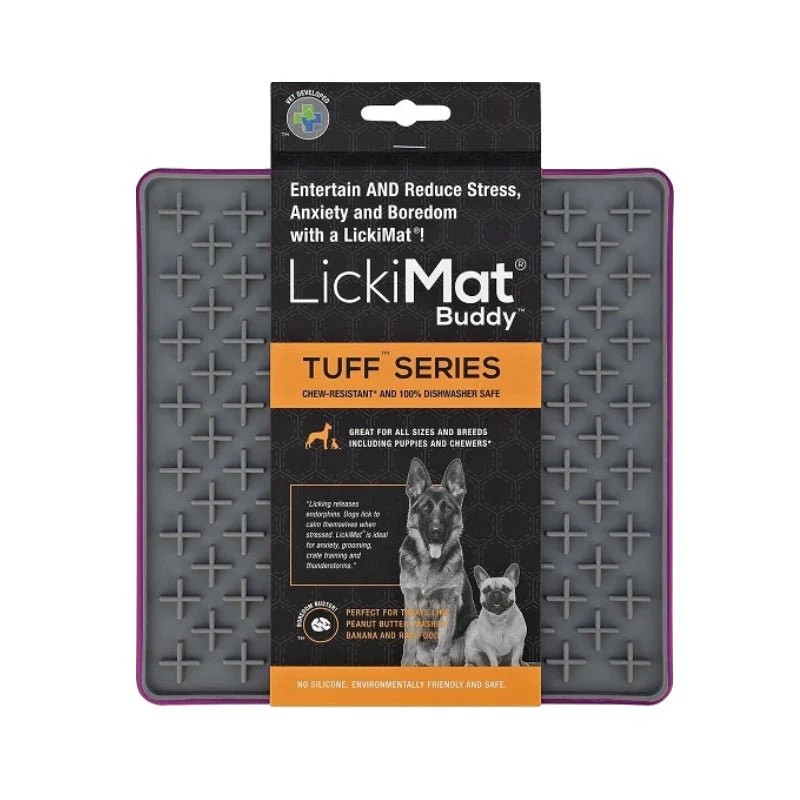
LickiMat Tuff Buddy
Best For: Anxious dogs that settle with repetitive licking
Material: Non-toxic food-grade TPR rubber with PP base
Capacity: 20 × 20 cm (8" × 8")
What We Like
- Durable Tuff construction
- Dishwasher and freezer safe
- Works with wet, dry, raw, and liquid foods
- Non-slip rubber feet
What We Don't Like
- Not indestructible for aggressive chewers
- No suction cups
- Grooves can trap food if not washed promptly
If you want a full menu of options, our best lick mats for dogs roundup covers the field, and puzzle feeders for anxious dogs goes deeper on the anxiety side.
For cats, the closed-room strategy from the last section carries most of the weight, but a pheromone diffuser running in that room takes the edge off the doorbell stress — it is the same product veterinary clinics use for hospitalized cats, and the effect builds over days, so plug it in a week ahead:
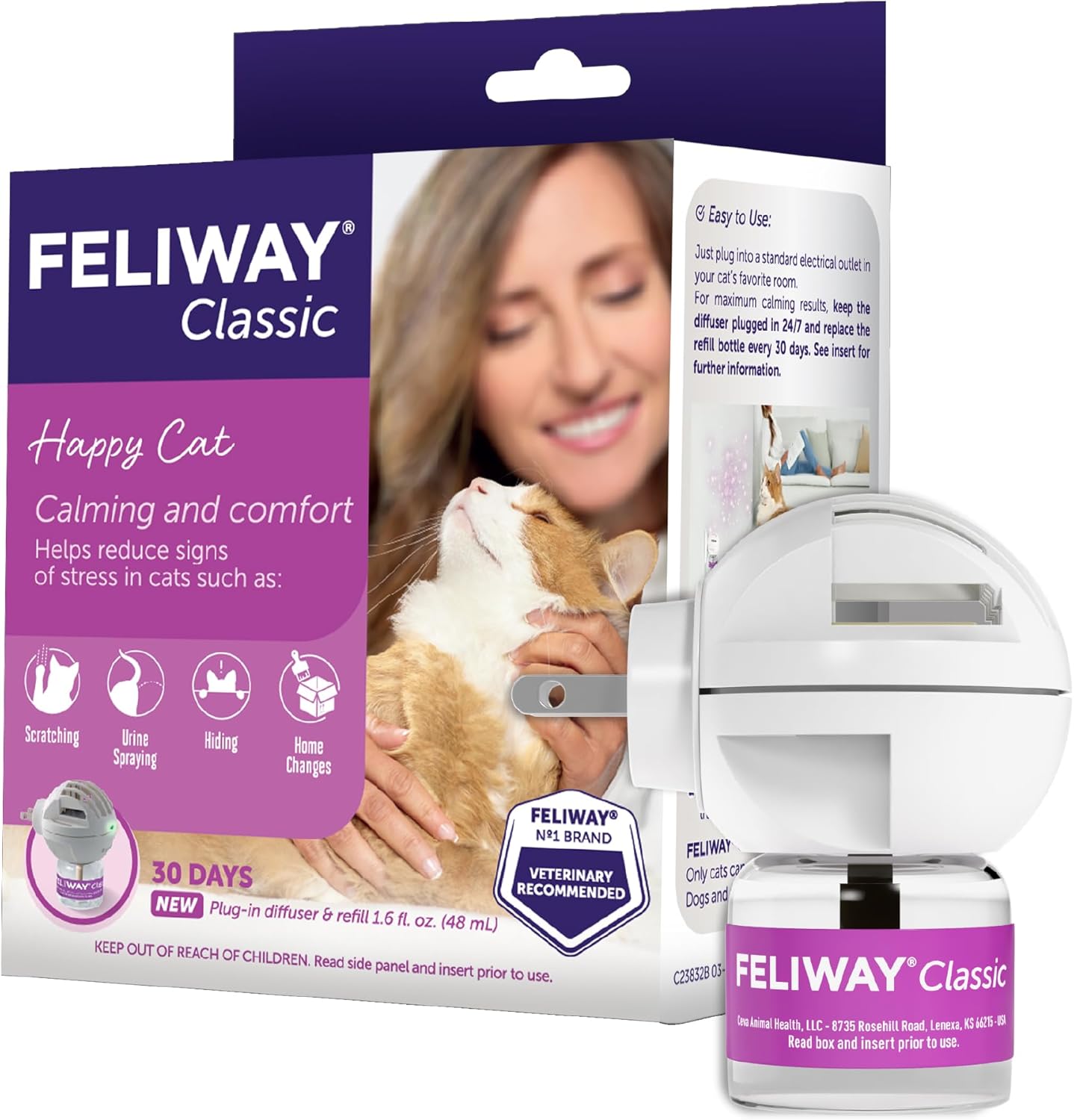 For the Cat Room
FELIWAY Classic Calming Pheromone Diffuser
Best For: Keeping Halloween doorbell stress below the bolt-out-the-door threshold
Material: Plug-in diffuser with 30-day refill, covers ~700 sq ft
Capacity: One diffuser per floor or conflict zone
What We Like
- Mimics the facial pheromone cats use to mark safe territory
- Vet clinics use it for exactly this kind of stress-linked condition
- Refills are inexpensive and widely available
- Odorless to humans
What We Don't Like
- Effects build over weeks — start before stressful events
- Won't reach a whole house from one outlet; needs one per floor
And accept the realistic outcome: even careful households end the night with vomit somewhere. Clean it with an enzyme cleaner rather than a general spray — regular cleaners leave enough scent residue that some dogs return to the spot, and if the accident was on carpet, that matters for the next week:
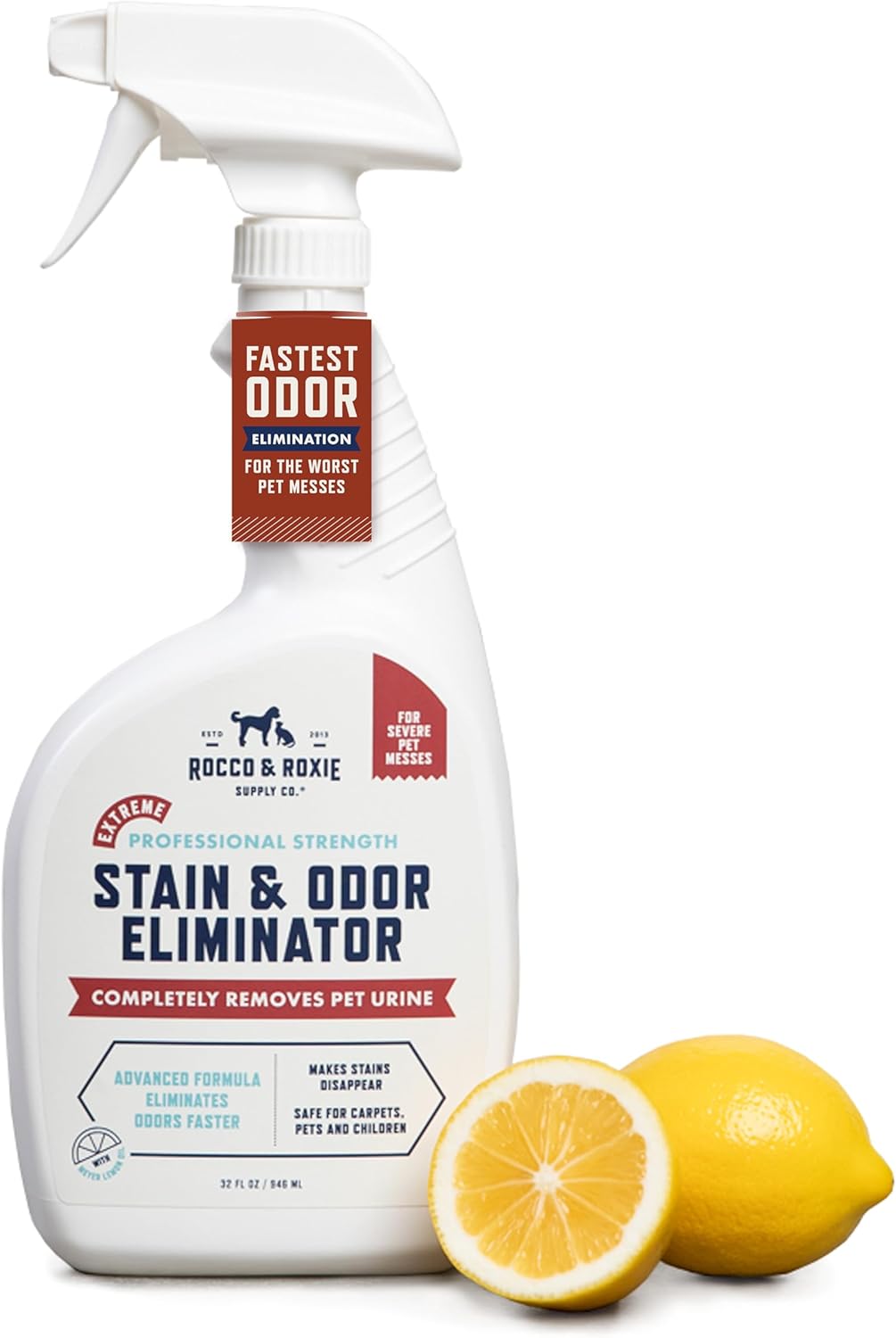
Rocco & Roxie Extreme Stain & Odor Eliminator (Enzyme Cleaner)
Best For: Post-Halloween vomit and accident cleanup that doesn't invite a repeat
Material: Enzyme formula (no chlorine, no colorants), safe around pets
Capacity: 32 oz spray bottle
What We Like
- Enzymes break down odor at the source, not just mask it
- Safe on carpets, upholstery, and litter-box areas
- Works on old stains, not only fresh ones
- Massively reviewed and consistently rated by cat and dog owners
What We Don't Like
- Needs to sit damp for 10–15 minutes to work fully
- Saturate generously on old stains — a little goes less far than you hope
The Night-Of Checklist
- Candy bowl elevated and covered; backup supply in a closed cabinet
- Treat bags and coats with gum physically out of reach, not just “on the counter”
- Dog walked and fed before trick-or-treat hours (a tired, fed dog raids less)
- Frozen stuffed toy ready to deploy at first doorbell
- Cat in a closed room with food, water, litter, and a hiding spot — door closed before the first knock
- Glow sticks and fake cobwebs up high or skipped entirely
- Both hotline numbers in your phone before the night: ASPCA 888-426-4435, Pet Poison Helpline 855-764-7661
- Pet wearing ID (and a tracking tag if they have one) all night, in case of a door dash
The Bottom Line
Rank the Halloween risks by what actually sends pets to the ER: dark chocolate and sugar-free gum first, raisins close behind, cannabis edibles rising every year, wrappers as the sleeper, and candy corn as a stomachache at worst. The protection is unglamorous — elevation, a closed door, a frozen rubber toy, and two phone numbers saved in advance — and it is nearly all of it. The pets who get hurt on Halloween are almost never the ones with careful owners who know the list; they are the ones nobody thought would reach the bowl.
For the other 51 weeks of the year, every item in this article has a full toxicity profile in our pet toxin lookup — searchable by food, plant, medication, or household item, with symptoms, thresholds, and when to call for each one.
Frequently Asked Questions
How much chocolate can kill a dog?
It depends on the chocolate type and the dog's weight. Mild signs (vomiting, restlessness, racing heart) begin around 20 mg of theobromine per kg of body weight, and tremors or seizures become possible around 40–50 mg/kg. Roughly: a 20 lb dog reaches the severe-poisoning zone at about half a pound of milk chocolate, or a single ounce of baking chocolate. Darker chocolate is dramatically more dangerous per piece. Any dark or baking chocolate ingestion warrants calling a vet or poison hotline immediately.
What are the symptoms of chocolate poisoning in dogs?
Vomiting and diarrhea usually come first, within 2–12 hours, followed by restlessness, panting, excessive thirst, and a racing heart. Serious cases progress to muscle tremors, seizures, and heart arrhythmias. Symptoms can lag well behind the eating, so do not wait for them to appear before calling a veterinarian or poison hotline — early decontamination works far better.
Is candy corn toxic to dogs?
Not in the toxin sense — candy corn is sugar, corn syrup, and wax with no theobromine or xylitol. A few dropped pieces are a stomach upset risk at most. The real issues are quantity (a bowlful can cause vomiting, diarrhea, and pancreatitis from the sugar and fat) and the wrapper it came in. Check the ingredient list anyway: some sugar-free versions use xylitol, which is a genuine emergency.
My dog ate a candy wrapper — should I worry?
A single foil or cellophane wrapper usually passes on its own within a day or two. Watch for repeated vomiting, refusing food, lethargy, or no stool — those suggest a partial obstruction and need a vet visit. A dog that ate a whole bowl of wrapped candy (a large wad of packaging) is at higher risk and is worth a preemptive call.
Can cats eat Halloween candy?
Cats generally avoid candy — they can't taste sweetness — and most feline Halloween emergencies are stress-related, not toxic. But cats are more sensitive to theobromine than dogs, so any chocolate eaten by a cat warrants a call at any amount. The bigger cat-specific hazard is glow sticks: the bitter liquid causes dramatic drooling within minutes, which looks alarming but is usually self-resolving after rinsing the mouth.
How fast does xylitol poisoning happen in dogs?
Blood sugar can drop within 30–60 minutes of a dog eating xylitol gum or candy, causing weakness, staggering, and seizures; higher doses can cause liver failure over the following hours to days. Because the window is so short, call a veterinarian or poison hotline immediately if your dog eats any sugar-free product — and do not induce vomiting unless a professional tells you to, as it can make the blood-sugar crash worse.
What do I do if my dog eats raisins on Halloween?
Call a veterinarian or poison hotline immediately, even if it was a small amount and even if your dog seems fine. Grape and raisin toxicity is unpredictable — some dogs develop acute kidney failure from a small handful — and there is no established safe threshold. Early treatment (decontamination and IV fluids) is the difference between a scare and kidney damage. Chocolate-covered raisins count as both a chocolate and a raisin exposure.