Bringing a puppy home is one of the most exciting milestones for a pet owner, but the first month is also when small oversights turn into big habits. Animal welfare groups consistently report that housetraining struggles, destructive chewing, and unrealistic expectations about how fast a puppy should “settle” are among the most common reasons new owners feel overwhelmed. Many of those problems can be prevented when you have the right supplies ready and a realistic timeline for the first 30 days.
This guide is built around the 3-3-3 rule, a framework used by shelters and rescue organizations to set realistic expectations for newly adopted dogs. You will get a complete shopping checklist, a week-by-week plan for the first month, and a free printable checklist you can keep on your fridge. We also point out the mistakes that cause the most stress for both puppies and owners.
A note on sources: The recommendations below are based on guidance from the American Animal Hospital Association (AAHA), the American Veterinary Society of Animal Behavior (AVSAB), the American Veterinary Medical Association (AVMA), the World Small Animal Veterinary Association (WSAVA), the ASPCA, and Humane World for Animals. This article contains affiliate links, which means we may earn a small commission at no extra cost to you. Our recommendations are chosen independently, and brands do not pay for placement.
Medical disclaimer: This article is for educational purposes only and is not a substitute for professional veterinary advice. If you have concerns about your puppy’s health, contact your veterinarian.
What Is the 3-3-3 Rule for Puppies?
The 3-3-3 rule is a simple timeline that describes how long most newly adopted dogs need to fully adjust to a new home. It is widely shared by shelters and rescues — and repeated by the American Animal Hospital Association’s consumer resources — as a helpful mental model rather than a clinical rule. Individual puppies vary, but the framework keeps owners from misreading normal stress as a permanent behavior problem.
3 Days to Decompress
The first three days are about survival, not training. Your puppy has left the only environment they knew, ridden in a car, and arrived in a house full of unfamiliar smells and sounds. During this period, most puppies benefit from a small, quiet space where they can rest and observe without pressure.
Set up a single “safe space” — a crate or an exercise pen in a calm room — with food, water, bedding, and a chew toy before the puppy arrives. Do not force interaction or overwhelm them with visitors. Let them come out of their crate on their own, and accept that they may sleep a lot or have a reduced appetite for the first day or two.
3 Weeks to Learn the Routine
By the end of three weeks, most puppies have started to understand the household routine. They know when meals happen, where they are expected to eliminate, and which areas are off-limits. This is when housetraining clicks for many puppies and when you can begin structured, positive-reinforcement training sessions.
Consistency is what makes this window work. Keep feeding times, potty breaks, play, and sleep on a predictable schedule. Puppies thrive on routine, and a stable routine reduces the anxiety that drives chewing, barking, and accidents.
3 Months to Feel at Home
After about three months, a well-managed puppy usually treats the home as territory. They are comfortable with family members, have a reliable housetraining rhythm, and show more of their true personality. Some puppies — especially those from shelters or with less early socialization — may take longer, and that is normal.
The key lesson of the 3-3-3 rule is patience. A puppy that has accidents at ten weeks is not “bad”; a puppy that chews the table leg is not defiant. They are simply a baby animal learning the rules of a brand-new world.
Before You Bring Your Puppy Home: The Shopping Checklist
Having the right supplies ready before pickup day removes a major source of stress. You do not need to buy everything at once, but the essentials below should be in place before the puppy arrives.
Food and Water Essentials
Start with the same food the breeder, shelter, or previous owner was feeding. Sudden diet changes are a common cause of diarrhea during the first week. If you want to switch brands later, transition gradually over 7 to 10 days. Whatever food you choose should carry an AAFCO statement confirming it is “complete and balanced for growth” — this means it meets established nutrient levels for a developing puppy.
- Puppy food. Look for a diet labeled “complete and balanced for growth” (or “for all life stages”). For a large- or giant-breed puppy expected to weigh over 70 lb as an adult, choose a food formulated for “growth including growth of large-size dogs,” which controls calcium and phosphorus to protect developing joints.
- Food and water bowls. Stainless steel is the most hygienic choice because it is non-porous and resists scratches where bacteria hide. Avoid plastic, which can scratch and has been linked to chin irritation in some dogs. A non-skid base keeps the bowl from sliding across the floor.
- Treats. Small, soft training treats are essential for positive reinforcement. They should make up less than 10 percent of daily calories.
- Slow feeder (optional). If your puppy inhales meals, a slow feeder extends eating time and reduces gagging and bloating. Our best slow feeder dog bowls guide covers the options, and our slow feeder bowl size guide helps you pick the right fit for a puppy.
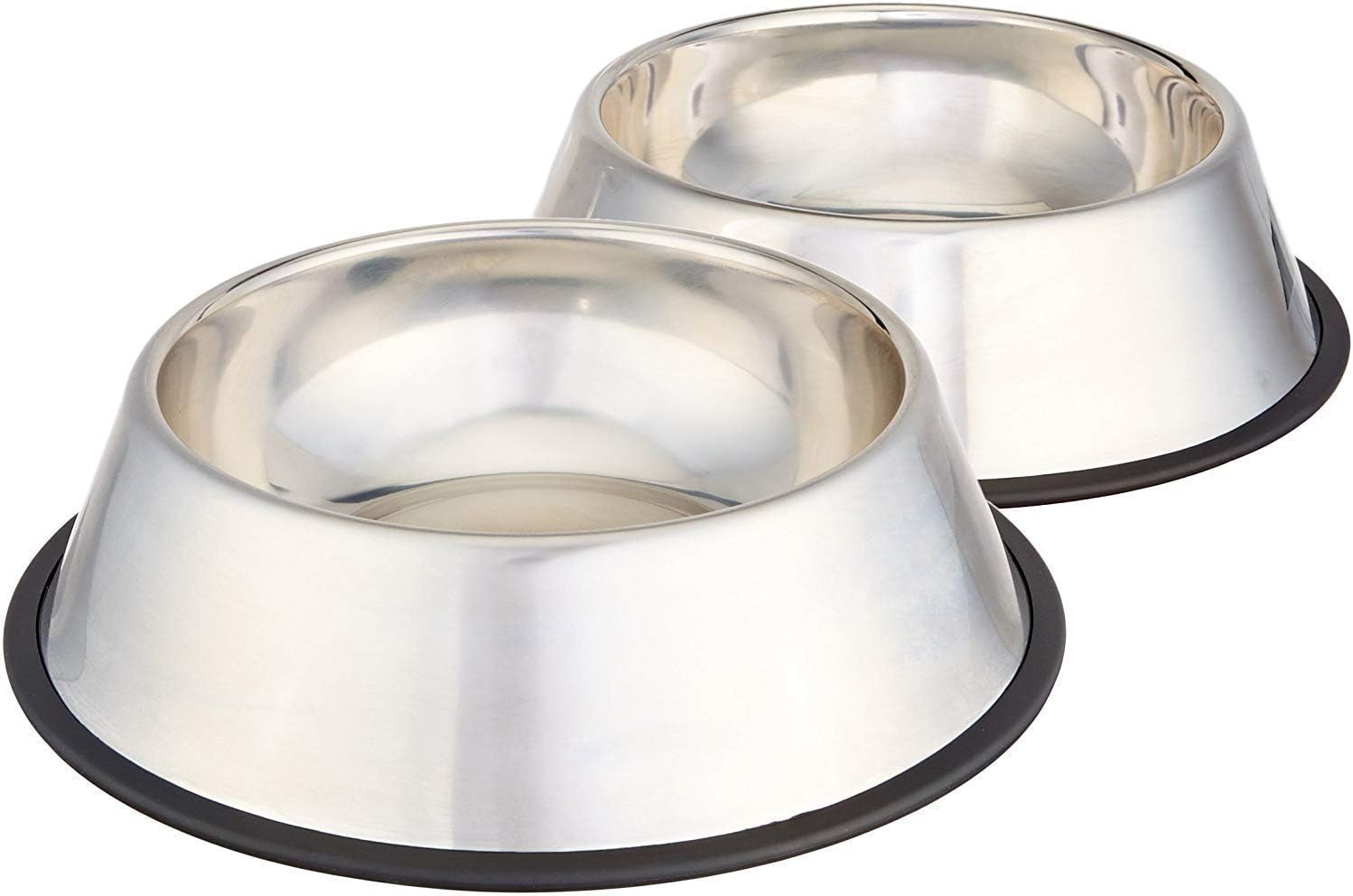 Food & Water Pick
Amazon Basics Stainless Steel Non-Skid Dog Bowls, 2-Pack
Best For: New puppy owners who want hygienic, tip-resistant bowls
Material: Food-grade 304 stainless steel
Capacity: 38 oz each
What We Like
- Non-porous stainless steel is the most hygienic choice
- Non-skid base stops sliding
- Dishwasher safe and rust resistant
- Two bowls for food and water
What We Don't Like
- Lightweight enough that a determined puppy can still nudge it
- No slow-feed pattern
Crate and Bedding
A crate is the single most important tool for the first month. Humane World for Animals recommends crate training because it taps into a dog’s natural instinct to seek a safe, quiet den — and it is the fastest path to housetraining, since puppies avoid soiling where they sleep.
- Crate with a divider. Choose a crate large enough for your puppy’s adult size, but use a movable divider to shrink the space to fit the puppy now. A crate that is too big encourages elimination in one corner. The divider lets one crate grow with your dog.
- Bedding. A washable crate pad or a soft blanket gives the puppy comfort. Expect the first pad to get chewed or soiled, so start with an inexpensive, machine-washable option.
- Calming bed (optional). A donut-style bed with raised edges helps some puppies feel secure once they have graduated from sleeping in the crate.
A critical safety note from Humane World for Animals: puppies should not be crated for longer than their age in months plus one hour — for example, a 3-month-old puppy needs a break within about 4 hours — because young puppies cannot hold their bladders that long. A crate is a management tool — never a punishment — and a puppy crated all day and night will become anxious and depressed.
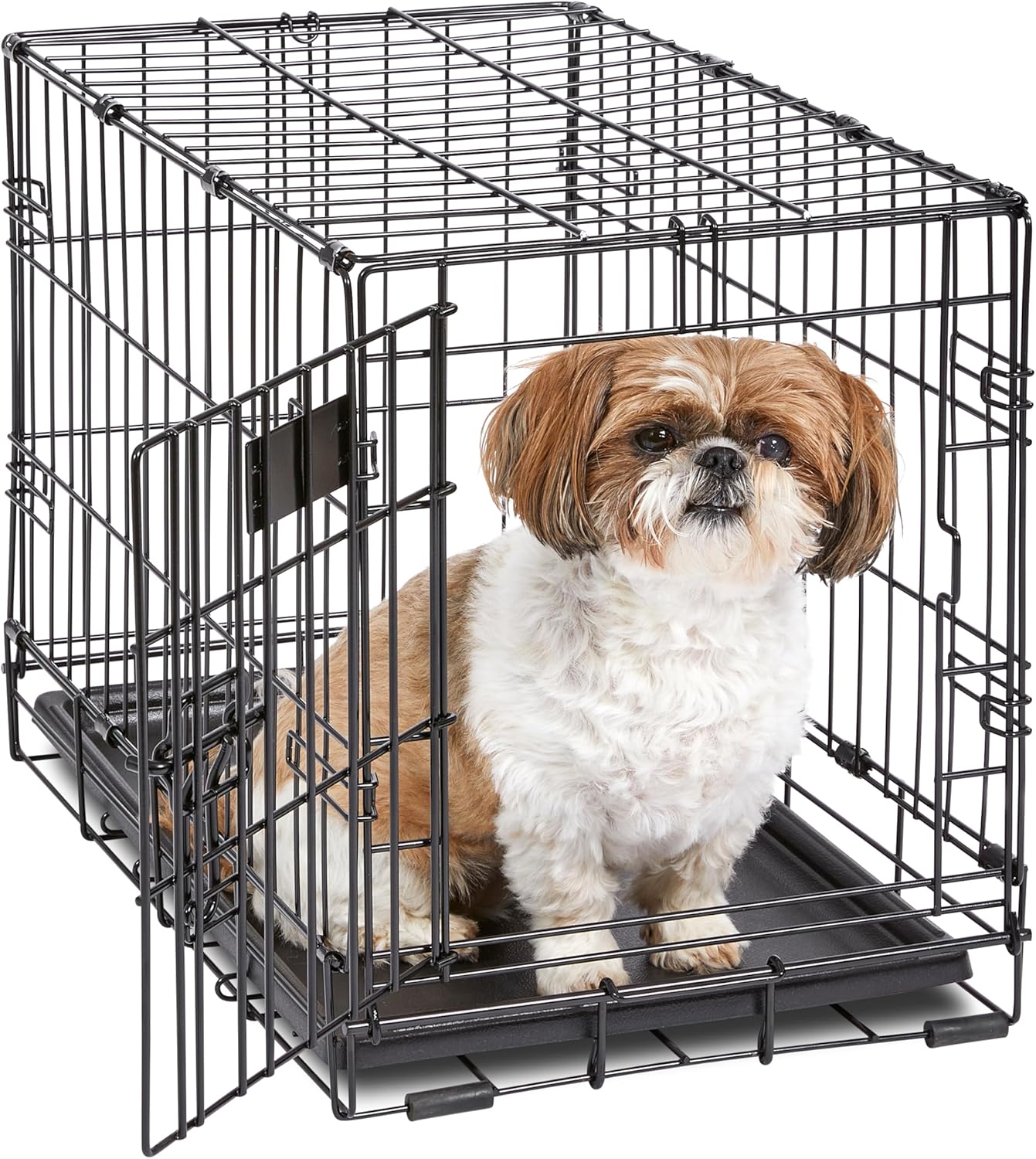 Crate Pick
MidWest Homes for Pets 22-Inch iCrate with Divider Panel
Best For: Small and toy breed puppies; grows with a divider
Material: Folding wire with plastic tray
Capacity: 22 in, up to 15 lb
What We Like
- Includes a movable divider for a growing puppy
- Folds flat for travel and storage
- Leak-proof removable tray
- Double latch for security
What We Don't Like
- 22-inch size fits small breeds only — size up for medium/large puppies
- Wire can be noisy on hard floors
Potty Training
Accidents are guaranteed during the first weeks. The goal is to manage them, not to eliminate them overnight.
- Enzyme cleaner. Standard cleaners mask the smell to human noses but leave behind proteins that draw puppies back to the same spot. An enzymatic cleaner breaks down the uric acid so the puppy no longer smells their accident.
- Potty pads (optional). Useful for very young puppies or apartment dwellers, though they can slow the transition to outdoor elimination. Many trainers prefer taking the puppy outside from day one.
- Waste bags. Stock up — you will use more than you expect.
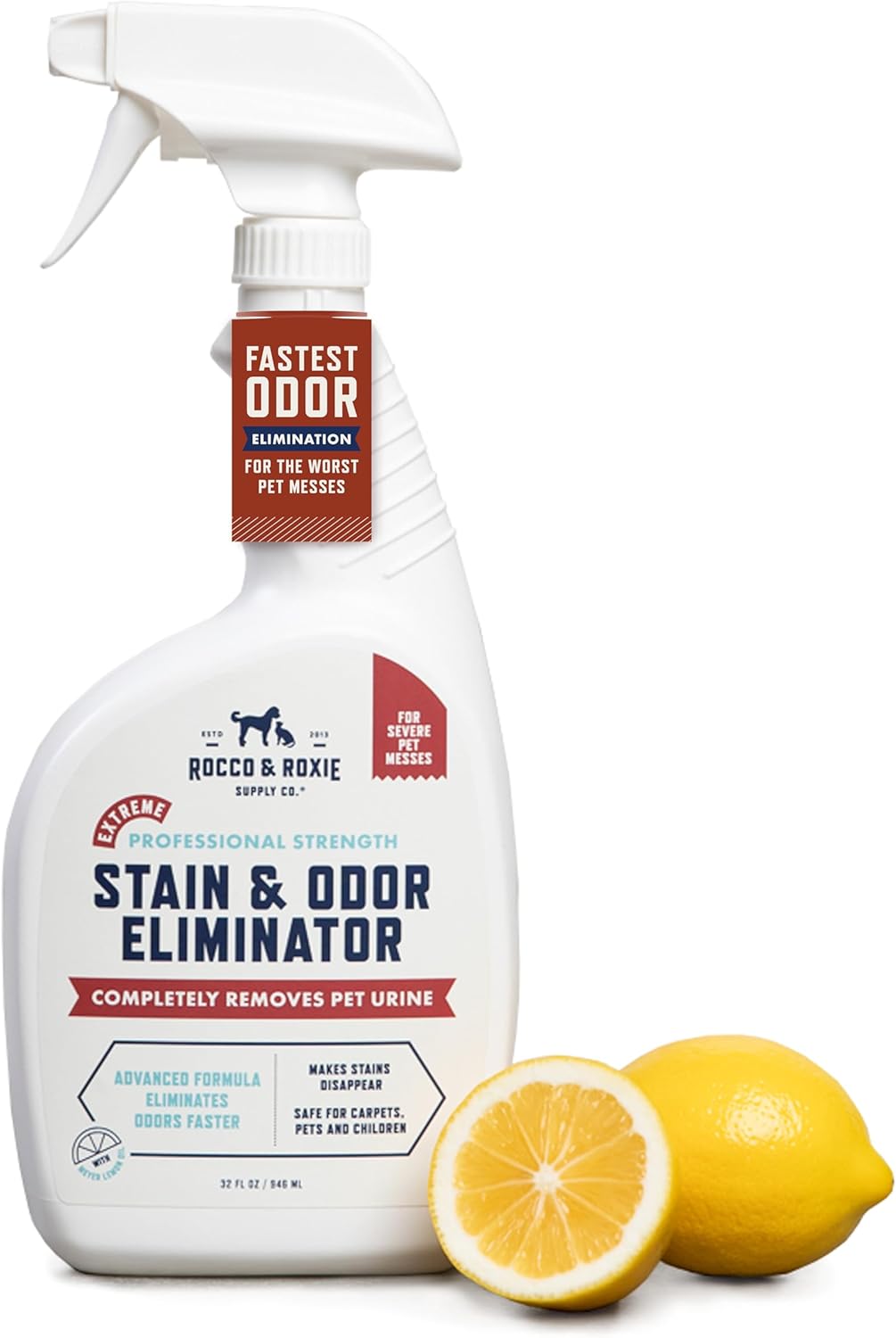 Potty Training Pick
Rocco & Roxie Extreme Stain & Odor Eliminator (Enzyme Cleaner)
Best For: Puppy accidents on carpet, rugs, and hard floors
Material: Enzymatic formula
Capacity: 32 oz spray
What We Like
- Enzymes break down urine so puppies are not drawn back
- Safe on carpets, upholstery, and hard surfaces
- Chlorine-free and cruelty-free
- Strong owner reviews for tough odors
What We Don't Like
- Must saturate the area and let it dry for full effect
- Spray nozzle can clog over time
Collar, Leash, and ID
- Collar with ID tag. A lightweight flat collar with an engraved ID tag is your first line of identification. Fit it so you can slip two fingers underneath.
- Leash. A 4- to 6-foot nylon or leather leash gives you control during walks and potty breaks. Retractable leashes are not recommended for puppies learning to walk on a loose leash.
- Harness. A no-pull front-clip harness (such as the PetSafe Easy Walk) gives you better control without putting pressure on a puppy’s developing trachea, and it is gentler than a collar for a dog that pulls.
- Microchip. The AVMA emphasizes that a microchip is a permanent form of identification — about the size of a grain of rice, it stores a unique ID number that must be registered in a database to work (it is not a GPS tracking device). Verify the registration is transferred to you after adoption and keep your contact information current.
Toys and Chews
Puppies explore the world with their mouths, and teething puppies between 12 and 16 weeks chew intensely to relieve gum pain. Give them appropriate outlets or they will find their own.
- Teething chew. A puppy-specific chew such as the Nylabone Puppy Starter Kit or a KONG Puppy (the soft rubber puppy version, not the hard adult KONG) gives sore gums relief. A KONG stuffed with wet food and frozen is a lifesaver for teething and for crate time.
- Interactive and puzzle toys. Treat-dispensing toys tire out a puppy’s brain, which is as important as physical exercise. See our puzzle feeders for anxious dogs and lick mats for dogs guides for enrichment ideas that also work for puppies.
- Fetch and tug toys. Soft plush toys (with squeakers removed once torn) and rope toys round out a basic toy box.
Grooming and Health
- Nail care. Start trimming nails weekly from the start so your puppy learns to accept handling. A grinder such as the Casfuy nail grinder is quieter and less likely to quick the nail than clippers, which is reassuring for nervous puppies. Trim only the tip to avoid the sensitive quick.
- Brush. A soft-bristle or rubber brush gets your puppy used to grooming and removes loose puppy coat.
- Toothbrush and enzymatic toothpaste. Daily brushing with dog-specific toothpaste (never human toothpaste, which contains xylitol) prevents the dental disease most dogs develop by age three.
- Veterinary care. Schedule a wellness exam within the first week. The AAHA canine vaccination guidelines call for core vaccines — distemper, adenovirus, parvovirus, and rabies, with leptospirosis now recommended as core — given as a series starting around 6 to 8 weeks and continuing every 3 to 4 weeks until 16 weeks. Your vet will tailor the schedule and discuss flea, tick, and heartworm prevention.
Optional but Helpful
- Exercise pen. A wire exercise pen extends the safe zone beyond the crate for supervised play. It is invaluable when you cannot watch the puppy every second.
- Training treats. Soft, tiny treats such as Zuke’s Mini Naturals are perfect for reward-based training sessions.
- Baby gates. Block off rooms that are not yet puppy-proofed.
Once your puppy is reliable out of the crate for short stretches, a donut-style calming bed gives them a cozy, secure spot of their own.
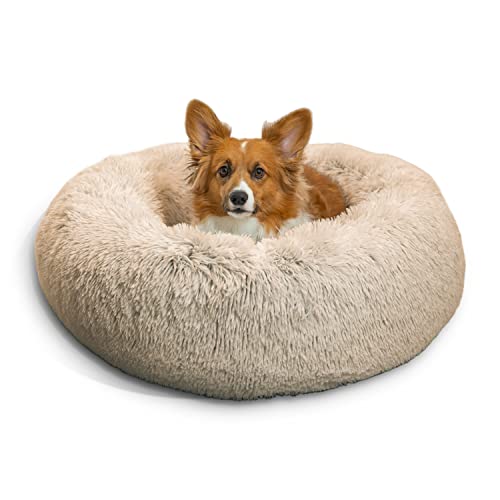 Comfort Pick
Best Friends by Sheri The Original Calming Donut Dog Bed
Best For: Puppies that like to curl up and feel enclosed
Material: Plush faux shag fur
Capacity: Small 23 x 23 in, up to 25 lb
What We Like
- Raised rim creates a sense of security
- Machine washable (small size)
- Soft, insulating material
- Water- and dirt-resistant base
What We Don't Like
- May flatten over time
- Large sizes require cover removal for washing
How to Puppy-Proof Your Home
Set Up a Safe Space
Choose a calm area where the puppy can be confined when you cannot supervise directly. A crate inside an exercise pen works well: the pen gives room to play, and the crate offers a den for naps. Keep this space free of cords, shoes, and anything you do not want chewed.
Puppy-Proof Room by Room
Puppies are curious and low to the ground. Address these hazards before day one:
- Electrical cords. Bundle and conceal them, or use cord protectors. Teething puppies will chew.
- Trash cans. Use cans with secure lids or keep them behind closed doors. Food wrappers and bones are common obstruction risks.
- Shoes and small objects. Socks, hair ties, rubber bands, and children’s toys can cause intestinal blockages if swallowed.
- Stairs. Block staircases with baby gates until your puppy is coordinated enough to navigate them safely.
- Household chemicals and medications. Store all cleaners, laundry pods, and human and pet medications in closed cabinets. Over-the-counter and prescription medications are among the ASPCA’s top toxin categories every year.
Know the Toxic Items
The ASPCA Animal Poison Control Center (hotline 888-426-4435, available 24/7) tracks the most common toxins reported each year. Keep these well out of reach, and call the hotline or your vet immediately if you suspect ingestion:
- Foods: xylitol (in sugar-free gum and many peanut butters — check the label), grapes and raisins (which can cause kidney failure), chocolate and caffeine, onions, garlic, and chives, macadamia nuts, alcohol, and raw yeast dough.
- Medications: both over-the-counter and prescription human drugs, plus flavored veterinary chews consumed in overdose.
- Household products: cleaners, antifreeze, rodenticides, and insecticides.
- Plants: many common houseplants are toxic to dogs. The ASPCA maintains a searchable toxic and non-toxic plant database — check every plant in your home.
The First 24 Hours: What to Expect
Pickup day should be low-key. Bring the puppy home in a carrier or on a leash, and go straight to their safe space. Let them explore at their own pace.
- Food and water. Offer a small amount of the familiar food and fresh water. It is normal for a puppy to skip a meal on the first day from stress.
- Potty break. Take the puppy to their designated outdoor potty spot (or pad) immediately on arrival and after every nap, meal, and play session.
- Interaction. Sit quietly nearby and let the puppy approach you. Avoid loud play, new visitors, and overwhelming handling on day one.
- Sleep. Puppies under four months need 18 to 20 hours of sleep a day. An overtired puppy bites and zooms — put them in the crate for a nap.
Expect whining the first few nights. A worn shirt with your scent and a soft heartbeat toy can comfort a puppy adjusting to sleeping alone.
Week-by-Week Checklist for New Puppy Owners
Week 1: Decompression
- Keep the puppy’s world small — crate, pen, and one or two puppy-proofed rooms.
- Feed the same food the breeder or shelter used.
- Take the puppy out for potty breaks after every nap, meal, and play session.
- Begin short, gentle handling (paws, ears, mouth) paired with treats.
- Schedule a wellness exam with your veterinarian.
Week 2: Building a Routine
- Set consistent feeding, potty, play, and sleep times.
- Start brief positive-reinforcement training (name, sit, eye contact).
- Continue daily handling for grooming and vet readiness.
- Monitor appetite, energy, and stool consistency.
Week 3: Socialization
- Begin safe, positive socialization — the AVSAB identifies the primary socialization period as the first three months, so this window is critical and closing.
- Introduce new people, surfaces, sounds, and gentle, vaccinated dogs in controlled settings.
- Enroll in a puppy class once your vet clears it.
- Gradually expand access to more of the home.
Week 4 and Beyond
- Continue vaccination and deworming series as scheduled.
- Build on basic cues and start loose-leash walking.
- Gradually reduce the number of potty accidents through consistent scheduling.
- Discuss spay/neuter timing with your vet — the AVMA notes the decision should be individualized by breed, sex, and size rather than a fixed age.
Common Mistakes New Puppy Owners Make
Giving too much freedom too soon. Free roam of the house guarantees accidents and chewed belongings. Expand access gradually as reliability grows.
Skipping the socialization window. The AVSAB is clear that the first three months are the primary socialization period. Puppies under-socialized during this window are more likely to develop fear and aggression later. Safe, positive exposure now — before the vaccine series is complete — is the standard of care.
Free-feeding. Leaving food out all day makes housetraining unpredictable and prevents you from noticing when your puppy goes off their food, an early sign of illness. Feed measured meals on a schedule.
Using punishment. Rubbing a puppy’s nose in an accident or scolding for chewing teaches the puppy to fear you, not to behave. Reward-based training is more effective and builds trust.
Inconsistent rules. If the puppy is allowed on the couch one day and scolded the next, they cannot learn. Decide the house rules before the puppy arrives and enforce them consistently.
Delaying the vet visit. A wellness exam in the first week establishes a baseline, confirms the vaccination schedule, and catches congenital or infectious issues early.
When to Call the Vet
Most first-week behaviors are normal, but some symptoms require prompt veterinary attention. Contact your vet if you notice any of the following:
- Refusal to eat or drink for more than 12 hours
- Repeated vomiting, or diarrhea lasting more than a day (especially with blood)
- Lethargy, weakness, or collapse
- Difficulty breathing or persistent coughing
- Straining to urinate or defecate, or no urination
- Sudden behavior changes, especially combined with hiding or vocalizing in pain
If you suspect your puppy has eaten something toxic — chocolate, xylitol, grapes, rat poison, or human medication — contact your veterinarian or the ASPCA Animal Poison Control Center at 888-426-4435 immediately. Do not wait for symptoms.
Download Your Free New Puppy Essentials Checklist
The first 30 days with a new puppy involve dozens of small tasks. To make it easier, we created a free printable checklist that includes:
- A complete pre-puppy shopping list
- The 3-3-3 rule timeline
- A first-week daily task checklist
Keep it on your fridge or in your puppy folder so nothing slips through the cracks.
Frequently Asked Questions
Frequently Asked Questions
What is the 3-3-3 rule for puppies?
The 3-3-3 rule is a widely shared adoption guideline: roughly 3 days to decompress, 3 weeks to learn the household routine, and 3 months to feel fully at home. It is a helpful framework used by shelters and rescues to set realistic expectations, not a clinical rule. Individual puppies adjust at their own pace.
What should I buy before bringing a puppy home?
Essentials include puppy food (labeled complete and balanced for growth), stainless steel food and water bowls, a crate with a divider, bedding, a collar with ID tag and leash, a harness, chew and teething toys, an enzyme cleaner, training treats, waste bags, and grooming basics such as a nail grinder and toothbrush. A wellness vet exam should also be scheduled for the first week.
How big should my puppy's crate be?
Choose a crate large enough for your puppy's adult size so you do not have to buy a second one, but use a movable divider to shrink the interior to fit the puppy now. The crate should be just big enough for the puppy to stand up, turn around, and lie down. Too much space encourages elimination in one corner and undermines housetraining.
How long can a puppy stay in a crate?
Per Humane World for Animals, puppies should not be crated for longer than their age in months plus one hour (a 3-month-old puppy, for example, needs a break within about 4 hours), because young puppies cannot hold their bladders that long. A crate is a management tool for short periods and overnight, never an all-day solution.
When should I start socializing my puppy?
The American Veterinary Society of Animal Behavior identifies the first three months as the primary socialization period and recommends beginning safe, positive socialization before the vaccination series is complete. Enroll in a well-run puppy class, and introduce new people, surfaces, sounds, and healthy, vaccinated dogs in controlled settings during this window.
How do I stop my puppy from having accidents in the house?
Take the puppy out after every nap, meal, and play session and reward them immediately for going outside. Supervise closely when loose, and confine to a crate or pen when you cannot watch. Clean any accident with an enzyme cleaner so the puppy is not drawn back to the scent. Most puppies gain reliable bladder control between four and six months.
Should I change my puppy's food right away?
No. Feed the same food the breeder or shelter used, then transition gradually over 7 to 10 days if you want to switch. Sudden changes commonly cause diarrhea. Whatever you choose, look for an AAFCO statement confirming the food is complete and balanced for growth.
Why is my new puppy not eating?
A reduced appetite is common in the first 24 to 48 hours due to stress. Make sure the food is the familiar brand and the environment is calm. If a puppy refuses food for more than 12 hours, or is also lethargic or vomiting, contact a veterinarian.
When should my puppy be spayed or neutered?
The AVMA recommends individualizing the decision based on breed, sex, and size rather than a fixed age. The traditional window is around six months, but some large and giant breeds may benefit from waiting until closer to skeletal maturity. Discuss the right timing for your specific puppy with your veterinarian.
When should I take my new puppy to the vet?
Schedule a wellness exam within the first week. Your vet will confirm a vaccination schedule — core vaccines start around 6 to 8 weeks and continue every 3 to 4 weeks until 16 weeks — check for parasites, and start flea, tick, and heartworm prevention. Seek urgent care if your puppy refuses food, vomits repeatedly, has persistent diarrhea, or seems lethargic.
Final Thoughts
The most important supply you can give a new puppy is patience. Some puppies settle in within days. Others take weeks to find their footing. Both outcomes are normal.
Use the 3-3-3 rule as a framework, not a deadline. Focus on a predictable routine, early positive socialization, and a safe space, and let your puppy build confidence at their own pace. The trust and good habits you establish during the first 30 days shape the dog your puppy becomes for the next decade and more.
If your puppy turns out to be a fast eater, see our guide to why dogs eat too fast once they move to adult meals. And download the free printable checklist to keep the first month organized.
Sources
- American Animal Hospital Association (AAHA). “2022 AAHA Canine Vaccination Guidelines.” https://www.aaha.org/resources/2022-aaha-canine-vaccination-guidelines/
- American Veterinary Society of Animal Behavior (AVSAB). “Position Statement on Puppy Socialization.” https://avsab.org/wp-content/uploads/2018/03/Puppy_Socialization_Position_Statement_Download_-_10-3-14.pdf
- American Veterinary Medical Association (AVMA). “Socialization of Dogs and Cats.” https://www.avma.org/resources-tools/animal-health-and-welfare/socialization-dogs-and-cats
- American Veterinary Medical Association (AVMA). “When Should We Neuter Dogs? It Depends.” JAVMA News, 2021. https://www.avma.org/javma-news/2021-03-01/when-should-we-neuter-dogs
- American Veterinary Medical Association (AVMA). “Microchips Reunite Pets with Families.” https://www.avma.org/resources-tools/pet-owners/petcare/microchips-reunite-pets-families
- World Small Animal Veterinary Association (WSAVA). “Global Nutrition Guidelines.” https://wsava.org/global-guidelines/global-nutrition-guidelines/
- U.S. Food and Drug Administration (FDA). “‘Complete and Balanced’ Pet Food.” https://www.fda.gov/animal-veterinary/animal-health-literacy/complete-and-balanced-pet-food
- American Society for the Prevention of Cruelty to Animals (ASPCA). “Animal Poison Control.” https://www.aspca.org/pet-care/aspca-poison-control
- American Society for the Prevention of Cruelty to Animals (ASPCA). “People Foods to Avoid Feeding Your Pets.” https://www.aspca.org/pet-care/aspca-poison-control/people-foods-avoid-feeding-your-pets
- American Society for the Prevention of Cruelty to Animals (ASPCA). “Vaccinations for Your Pet.” https://www.aspca.org/pet-care/general-pet-care/vaccinations-your-pet
- Humane World for Animals. “How to Crate Train Your Dog or Puppy.” https://www.humaneworld.org/en/resources/crate-training-101
Product notes: All Amazon ASINs and product images were verified at the time of writing (July 2026). Star ratings, review counts, and prices are snapshots and may change. Always confirm the current listing before purchasing.