
It usually starts late at night. Your cat goes to the litter box, squats, strains — and nothing happens. He goes back ten minutes later and tries again. He may cry out, lick at his rear end, or start squatting in odd places like the bathtub or a laundry basket. Owners describe it the same way every time: “he keeps trying to pee but nothing comes out.”
Here is the one fact that matters more than everything else in this article: if a cat is straining and producing no urine, he may be blocked — a urethral obstruction — and a blocked cat can die within 24 to 48 hours. This is not a “wait until the vet opens” situation. It is a drop-everything, drive-now emergency. Male cats are affected far more often than females because their urethra is longer and narrower, and it is one of the few true emergencies in cats that can kill a young, otherwise healthy animal in two days.
This guide covers the 60-second check you can do tonight, how to tell a blockage from the less-deadly (but still urgent) conditions that mimic it, what actually happens at the emergency clinic, why the bill is what it is, and — if your cat is fine right now — the prevention steps that matter most.
The 60-Second Check: Is Urine Coming Out?
Everything hinges on one question: when your cat strains, does any urine come out?
Go to the litter box with a flashlight. Rake through the litter. Look for recent wet spots, clumps, or dark spots on the floor, in the bathtub, on laundry. Then watch the next attempt.
- No urine at all — or a few drops — over several attempts. Treat this as a blockage until a vet says otherwise. Go now, even at 2 a.m. If you cannot tell, treat it as a blockage anyway; the downside of a false alarm is an exam fee, and the downside of guessing wrong is your cat’s life.
- Small amounts of urine, produced frequently, possibly with blood. This is more often cystitis (bladder inflammation) — still needs a vet the same day, but it is not usually the clock-is-ticking emergency a blockage is.
- Normal-sized puddles in inappropriate places. More likely behavioral or litter-box-related, not a blockage.
One more sign that overrides everything above: a hard, firm, painful belly, especially if your cat growls or tenses when you gently touch it, or if he is hiding, vomiting, or refusing food. Those are late signs of a full bladder backing up into the kidneys. Stop reading and call an emergency clinic.
If you are not sure what you are seeing, our Pet Poison Triage wizard includes “straining to urinate or producing no urine” in its red-flag symptom checklist — it is designed for exactly this kind of 2 a.m. “is this an emergency?” moment.
The Red-Flag Signs of a Blocked Cat
A blocked cat rarely shows all of these. Any one of the first three, in a straining cat, is enough:
- Repeated trips to the litter box with little or no urine produced
- Crying or vocalizing while straining
- Licking the genital area repeatedly (not normal grooming — frantic, focused licking)
- A firm, distended, painful abdomen
- Vomiting, loss of appetite, or drooling (these appear as toxins build up)
- Hiding, lethargy, or unusual aggression when touched
- Squatting in strange places — bathtubs, sinks, piles of laundry
The progression has a grim rhythm owners describe again and again: frantic straining for hours, then the cat goes quiet and hides. That quiet phase is not improvement — it is a cat getting sicker. Potassium building up in the blood starts to affect the heart. From there, collapse and death can come quickly. Cornell Feline Health Center and every emergency-medicine source agree on the timeline: a completely blocked cat typically survives 24 to 48 hours without relief, and sometimes less.
Why This Kills: What’s Actually Happening
Understanding the mechanism makes the urgency obvious — and it explains why no home remedy can fix it.
The urethra — the tube from the bladder to the outside — plugs, most often with a soft mucus-and-crystal plug in male cats, sometimes with a small bladder stone. The bladder keeps filling, but there is nowhere for urine to go. The pressure backs up into the ureters and kidneys, which can no longer drain. The kidneys effectively shut down, and waste products that are normally excreted — including potassium — accumulate in the bloodstream.
Rising potassium is the killer: it slows and disrupts the heart’s rhythm, which is why blocked cats sometimes die suddenly, before the bladder itself gives out. Meanwhile the bladder wall, stretched and deprived of blood flow, is at risk of rupture, and the retained urine begins to damage the kidneys themselves. Every hour of obstruction does damage that may or may not be fully reversible.
This is why “can’t I just wait and see” is the one question with a hard no. There is no home technique that clears a urethral plug. Not water. Not a warm compress. Not massaging the bladder — which is actually dangerous, because you can rupture it. The only fix is a procedure at a veterinary clinic.
Blocked vs. Cystitis vs. Behavioral: The Comparison Table
Urinary trouble in cats falls into three broad buckets. They overlap at the straining stage, which is why the urine check above matters so much:
| Urethral blockage | Cystitis / FIC | Behavioral / litter box issue | |
|---|---|---|---|
| Urine produced | None, or a few drops | Small frequent amounts, often with blood | Normal amounts, in the wrong places |
| Straining | Constant, unproductive | Frequent, but productive | Occasional, casual posture |
| Behavior | Restless, then hiding; crying out; frantic licking | Uncomfortable but stays engaged; may avoid the box | Otherwise completely normal |
| Timeline | Fatal in 24–48 hours | Days; needs a vet within 24 hours | Not medical |
| Most common in | Male cats, often young, indoor, overweight | Cats under 10 (stress-linked FIC); older cats (infection is rarer than people think) | Any cat after a household change |
| What to do | Emergency clinic now | Same-day vet appointment | Look at the box and the household routine |
Two notes on the middle column, because it is where most straining cats actually land:
FIC — feline idiopathic cystitis — is the most common cause of lower urinary signs in cats under 10, accounting for roughly two-thirds of cases. “Idiopathic” means the bladder is inflamed without infection or stones; it is now understood to be stress-linked, flaring when a sensitive cat’s environment changes (new pet, new schedule, a stray cat visible outside the window). The signs can look alarming — blood in the urine, straining, frequent trips — but urine is still being produced, and FIC usually resolves in days with pain control and stress management. The catch: a cat with FIC can still become blocked, and a blocked cat that unblocks can look “fine.” The urine check is the only reliable divider.
Urinary tract infection is uncommon in young cats. When a vet finds bacteria in a young cat’s urine, it is often secondary to another problem. In cats over 10, true infections become more common (often alongside kidney or thyroid disease) and need proper treatment. Either way, “my cat has a UTI, I’ll get antibiotics” is a diagnosis that needs a urine test, not an assumption.
What Happens at the Emergency Clinic
Knowing the sequence in advance makes the visit less scary — and makes the estimate easier to read.
- Stabilization. The vet will palpate the bladder (a blocked bladder feels like a firm, tangerine-to-peach-sized organ), and likely run bloodwork immediately — specifically checking kidney values (BUN, creatinine) and potassium, because those determine how sick your cat really is.
- Decompressive cystocentesis. If the bladder is dangerously full, the vet drains it with a needle through the abdominal wall. It sounds dramatic; it takes seconds, relieves the pressure, and can be lifesaving on its own.
- Unblocking. Under sedation, a urinary catheter is passed up the urethra and the plug is flushed back into the bladder (retrograde urohydropropulsion). The bladder is emptied and flushed; the catheter usually stays in for 24–48 hours while the urethra recovers.
- Hospitalization. Most blocked cats stay 1–3 days on IV fluids, which both rehydrate them and help the kidneys clear the backed-up waste. Repeated bloodwork confirms the potassium is normalizing.
- Going home. With pain medication, sometimes a diet change, and a follow-up urine check. Some cats — roughly a quarter to a third — re-block within days or weeks, so the first two weeks at home are a watch period.
If a cat re-blocks repeatedly, the conversation turns to a surgery called a perineal urethrostomy — widening the urethral opening surgically. It is a bigger procedure with its own long-term considerations, but for cats that keep blocking, it is often the difference between a normal life and a fatal third episode.
The Part Nobody Wants to Talk About: The Cost
A blocked cat is one of the most expensive common emergencies in feline medicine. In the United States, a typical unblocking with hospitalization runs $1,000–$3,000 at an emergency clinic, depending on region, how sick the cat is on arrival, and how many days of hospitalization are needed. A perineal urethrostomy typically adds $2,000–$4,000.
That number is why you will find heartbreaking posts on every pet forum — owners facing a four-figure estimate at 3 a.m., sometimes for cats that were perfectly healthy two days earlier. If you are in that situation right now, three honest suggestions:
- Ask the clinic what the estimate covers and what the tiers are. There is often a difference between “what it takes to save him tonight” and the full gold-standard plan. Stabilization tonight plus transfer to your daytime vet in the morning can sometimes meaningfully lower the total.
- Ask about payment options before treatment starts. CareCredit and Scratchpay are accepted at most US emergency clinics. Many clinics also hold internal funds or know of local rescue organizations that help with emergency vet bills — the clinic staff deal with this question every night and most will help you look.
- Do not skip the visit to save the exam fee. A cat euthanized for cost that would have survived with 48 hours of care is the worst outcome in this entire article, and part of preventing it is knowing your options before you are standing at the front desk in shock.
For everyone else: this emergency is a large part of why pet insurance exists. A policy bought when your cat is young and healthy typically costs a fraction of one blockage episode, and urinary obstruction is squarely the kind of condition it covers.
Prevention: What Actually Reduces the Risk
Blockages and FIC share enough risk factors that the prevention advice is the same, and it is genuinely effective — environmental change reduces FIC recurrence substantially in the research (the Ohio State College of Veterinary Medicine’s “Indoor Pet Initiative” is the best-known framework). Four levers, in order of impact:
1. Water, water, water. Cats evolved from desert hunters with a weak thirst drive; a dry-food-only cat lives in a state of mild, chronic dehydration, and concentrated urine is the raw material for plugs and crystals. The single highest-impact change is shifting a meaningful portion of the diet to wet food, which is roughly 75% water. Water fountains help some cats drink more (many prefer moving water), and multiple water stations around the house mean drinking is never a trip worth skipping. Our best ceramic cat bowls guide covers bowls that keep water fresh and appealing.
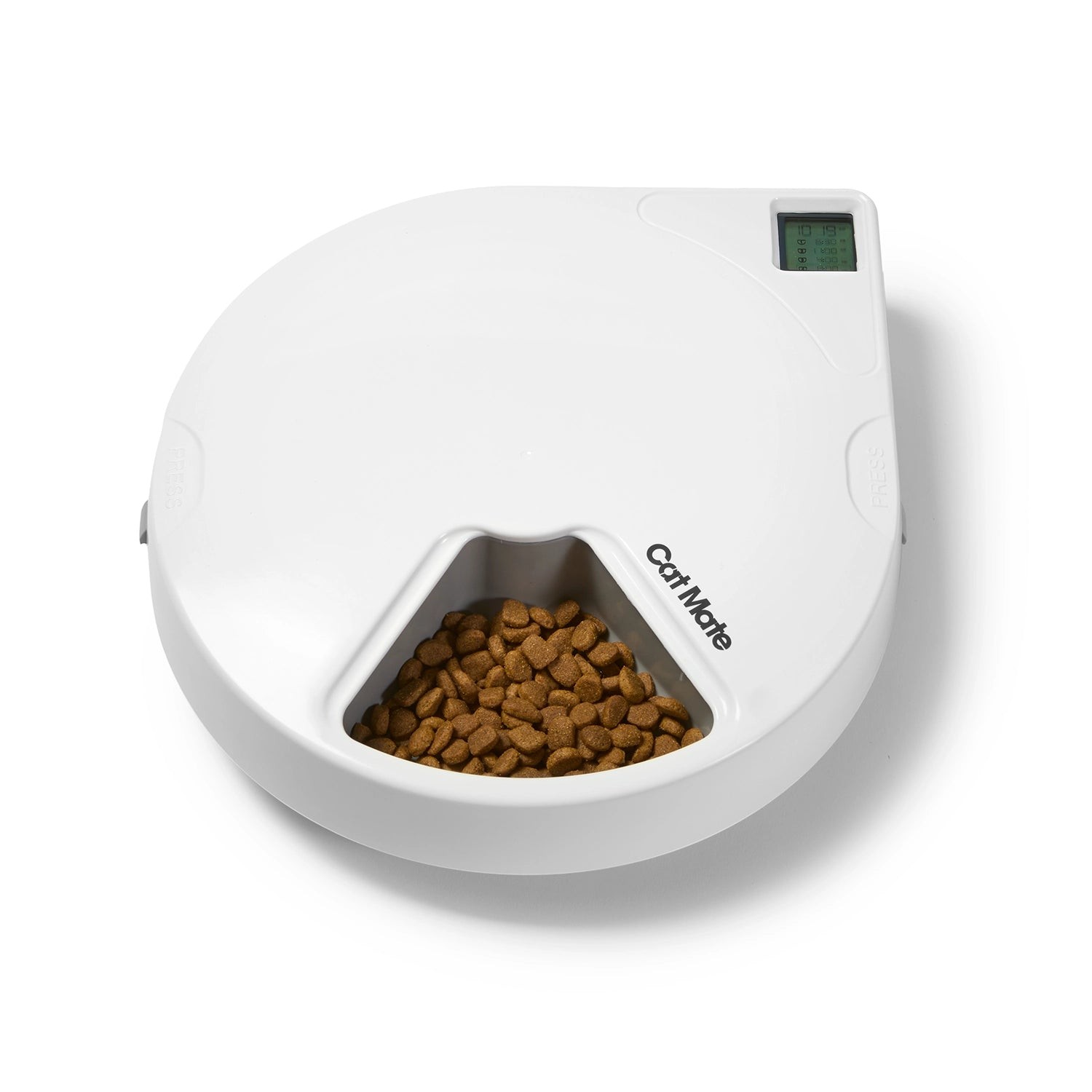
If your schedule makes regular wet-food meals hard, an automatic wet-food feeder keeps the hydration habit running even when you are not home:
 Hydration
Cat Mate C500 Automatic Pet Feeder
Best For: Scheduled wet-food meals with ice packs for freshness
Material: BPA-free plastic, dishwasher-safe tray, twin ice packs
Capacity: 5 meals — 2 large compartments plus 3 smaller ones
What We Like
- Keeps wet food fresh with ice packs and a sealed lid
- Two large compartments hold a full day of wet meals
- Battery powered — works through power and WiFi outages
- Simple timer, no app required
What We Don't Like
- Only 5 compartments — not for multi-cat households
- Some cats figure out the lid; a cover guard is available
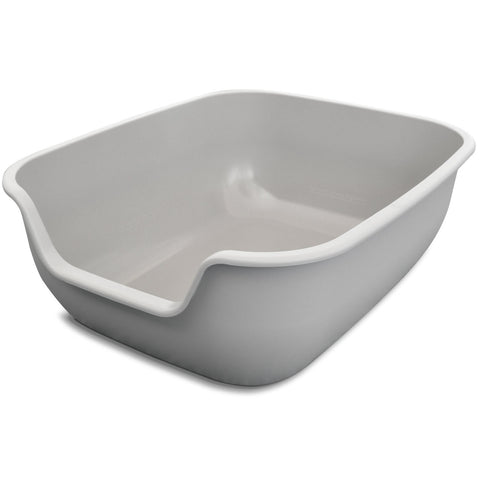
2. Enough litter boxes, kept clean. The rule of thumb is one box per cat plus one, scooped daily. A cat who holds his urine because the box is dirty or guarded by another cat is a cat producing more concentrated urine — the exact risk profile for plugs. Box design matters for monitoring, too: a high-sided, easy-clean box makes it easier to notice whether today’s clumps are getting smaller, which is often the earliest signal of trouble:
 Monitor
PetFusion BetterBox Non-Stick Large Litter Box
Best For: High-sided, easy-clean box that makes clump size easy to monitor
Material: Non-stick recycled plastic, non-slip base
Capacity: Large — suits most adult cats; front wall is lower for entry
What We Like
- High walls contain spraying and scatter — clumps stay visible
- Non-stick coating means clumps release whole, so volume is easier to judge
- Sturdy and stable for large cats
- Backed by a 12-month warranty
What We Don't Like
- Priced well above basic litter boxes
- Big footprint — measure your space
3. Reduce stress — seriously. For the FIC-prone cat, stress is not a vague concept; it is the trigger. The changes that most often precede a flare: a new pet or baby, a move, a schedule change, a new cat visible through the window, holiday chaos. The fixes are boring and they work: keep routines predictable, add vertical territory (a cat tree or shelf per conflict zone), play sessions that let the cat hunt, and pheromone support for multi-cat households:
 Stress
FELIWAY Classic Cat Calming Diffuser Kit
Best For: Stress-linked urinary flares in indoor and multi-cat homes
Material: Plug-in diffuser with 30-day refill, covers ~700 sq ft
Capacity: One diffuser per floor or conflict zone
What We Like
- Mimics the facial pheromone cats use to mark safe territory
- Vet clinics use it for exactly this kind of stress-linked condition
- Refills are inexpensive and widely available
- Odorless to humans
What We Don't Like
- Effects build over weeks — start before stressful events
- Won't reach a whole house from one outlet; needs one per floor
If you want to get better at reading your cat’s stress signals before they become a urinary flare, our cat body language guide covers the early signs most owners miss.
4. Weight and activity. Overweight, indoor, young male cats are the textbook blockage demographic. Weight management is the slowest lever but a real one — and the play sessions that burn calories double as stress relief. New cat owners setting up a home from scratch can bake most of this in from day one with our new cat owner checklist.
One last household item that earns its place: if your cat is having accidents — with FIC, or while recovering from a catheter — an enzyme cleaner removes the urine scent completely. Regular cleaners leave enough residue that cats (and their noses) keep returning to the same spot, and repeated soiling in one place hides the signal that the litter box is being avoided:
 Cleanup
Rocco & Roxie Extreme Stain & Odor Eliminator (Enzyme Cleaner)
Best For: Removing urine scent so accidents don't repeat in the same spot
Material: Enzyme formula (no chlorine, no colorants), safe around pets
Capacity: 32 oz spray bottle
What We Like
- Enzymes break down urine odor at the source, not just mask it
- Safe on carpets, upholstery, and litter-box areas
- Works on old stains, not only fresh ones
- Massively reviewed and consistently rated by cat and dog owners
What We Don't Like
- Needs to sit damp for 10–15 minutes to work fully
- Saturate generously on old stains — a little goes less far than you hope
What About Female Cats — and Dogs?
Female cats have a shorter, wider urethra, so obstruction is genuinely rare — but it happens, usually with a stone or tumor, and when it does it is just as much an emergency. A female cat straining unproductively gets the same advice: vet, now.
Dogs get their own version, most often from bladder stones, and certain breeds (Dalmatians, Bichons Frises, Miniature Schnauzers, Shih Tzus) are stone-prone. A dog straining to urinate with nothing coming out is the same emergency in a different body — go now. And if the straining came on right after eating something they shouldn’t have, run it through our toxin lookup tool on the way to the phone.
The Takeaway
If you take away three things from this article: check for urine — it is the divider between “emergency tonight” and “vet tomorrow.” Never wait out a blockage — the mechanism is kidney pressure and heart-threatening potassium, and it kills inside two days. And if your cat has recovered from one, the prevention section is not optional reading — a cat that has blocked once is a cat likely to block again without the water and stress changes.
For more problem-solving guides like this one, browse our problem-solving category.
Frequently Asked Questions
Frequently Asked Questions
How long can a cat go without peeing?
A healthy cat urinates 2–4 times a day. A cat that has not urinated in 12 hours is cause for concern; by 24 hours without producing urine, treat it as an emergency. A completely blocked cat typically survives 24–48 hours, and sometimes less, because rising blood potassium disrupts the heart. If your cat is straining with no urine, do not start a countdown — go to a vet immediately.
My cat is straining but some urine is coming out — is that still an emergency?
It changes the category. Productive straining with small, frequent, sometimes bloody amounts of urine is most often cystitis (FIC), which is not usually immediately fatal but still needs a vet visit the same day — partly because a cat with FIC can still become blocked, and only the amount of urine produced tells you which situation you are in.
Can a female cat get a urinary blockage?
Rarely — the female urethra is shorter and wider, so plugs are uncommon. When females do obstruct it is usually a bladder stone or, in older cats, a tumor, and it is just as much an emergency. Any cat of either sex straining without producing urine needs urgent veterinary care.
Can I treat a urinary blockage at home?
No. There is no home technique that clears a urethral plug, and massaging or pressing on the bladder can rupture it. The only treatment is catheterization at a veterinary clinic, ideally after bloodwork shows how sick your cat is. Home care begins only after a vet has unblocked your cat.
How much does it cost to unblock a cat?
In the United States, emergency treatment for a blocked cat typically runs $1,000–$3,000 including sedation, catheterization, and 1–3 days of hospitalization, depending on region and severity. If re-blocking leads to perineal urethrostomy surgery, that typically adds $2,000–$4,000. Ask the clinic about payment plans, CareCredit, and rescue-fund options before treatment starts if cost is a barrier.
Will it happen again after treatment?
Possibly — roughly a quarter to a third of blocked cats re-obstruct, and the first two weeks after treatment are the highest-risk window. That is why prevention (more water, wet food, clean and plentiful litter boxes, stress reduction, weight control) is treated as part of the treatment, not optional advice. Cats that block repeatedly are candidates for perineal urethrostomy surgery.
Is blood in my cat's urine an emergency?
Blood in the urine is common with cystitis and usually not immediately life-threatening if urine is still flowing — but it always warrants a vet visit within 24 hours. The combination of blood plus straining with no urine produced is an emergency, because that pattern means obstruction.
Does wet food really prevent urinary problems in cats?
It is the single most evidence-aligned change most owners can make. Wet food is roughly 75% water, and cats on wet diets produce significantly more dilute urine, which reduces the crystal and plug formation that causes blockages. Transitioning even half the diet to wet food, plus always-available fresh water, meaningfully lowers risk.