You keep asking the question, and no one will give you a straight answer. That is not because they are being cruel or evasive. It is because there is no single moment — no line your cat crosses that makes the decision obvious. What exists instead is a way of looking at the whole picture, week by week, that helps you see when the balance has tipped. This guide is that way of looking.
If your cat is elderly, you may already know the timeline you are working with. A 15-year-old cat is roughly 76 in human terms, and a 19-year-old is in her mid-90s — you can confirm your cat’s age with our cat years to human years chart or the cat age calculator. But age alone never makes this decision for you. A frail 19-year-old may still have good weeks ahead, and a younger cat with an aggressive illness may not. The decision rests on quality of life, not a number.
The Reframe: You Are Not “Giving Up”
Before the framework, one thing needs saying, because it is the thing that torments owners most. Choosing euthanasia for a cat you love is not giving up on them. It is the last act of care you can offer — taking their pain onto yourself so they don’t have to carry it. Veterinarians who do this work every day, and owners who have been through it, say the same thing in different words: people rarely regret ending it a week too early. They very often regret waiting a week too long.
The goal of everything below is to help you tell the difference — and to give you something concrete to discuss with your vet, who should always be a partner in this decision, not a stranger you hand it to.
The Quality-of-Life Framework Vets Actually Use
The most widely used tool for this is the HHHHHMM scale, developed by veterinarian Dr. Alice Villalobos and adopted by the AAHA/IAAHPC end-of-life care guidelines. “Quality of life” sounds abstract; this scale breaks it into seven things you can actually observe and score. You rate your cat on each, from 0 (terrible) to 10 (ideal), and the total gives you a snapshot you can track over time.
The seven categories:
- Hurt — Is your cat’s pain well controlled? Cats hide pain by instinct, so this is the hardest to read and the most important to ask your vet about directly. Signs include hiding more, less grooming, squinting, and resentment of being touched in certain places.
- Hunger — Is your cat eating enough to maintain weight? Refusing food, or only eating with heavy coaxing, is a major signal.
- Hydration — Is your cat drinking, or getting fluids? For cats with kidney disease (the most common cause of decline in older cats), subcutaneous fluids at home often extend good time.
- Hygiene — Can your cat keep themselves clean? Matted fur, urine scalding, or a constantly soiled rear end — common in arthritic cats who can no longer groom or posture — are quality-of-life issues, not just messes.
- Happiness — Does your cat still have moments of engagement — a purr, a head-bunt, interest in a favorite spot or person? This is the one owners feel most intuitively.
- Mobility — Can your cat move to the things they need (food, water, litter, a warm bed)? Stiffness is manageable; being unable to reach the litter box without soiling themselves is not the same problem.
- More good days than bad — Over the course of a week, are there more comfortable days than hard ones? This single ratio is, for many owners, the clearest signal of all.
A common interpretation of the scale: a total above 35 out of 70 generally suggests acceptable quality of life, while a falling score — or a string of bad days that no longer outnumber the good — is a signal to have a serious conversation with your vet. Do not treat any number as a verdict. The value is in tracking it over time, because the decline you barely notice week to week becomes obvious on paper.
How to Use It Without Obsessing
The scale is a tool, not a ritual. Here is how to use it well:
- Score once a week, on the same day. Pick a quiet moment. Write the number down. The trend matters far more than any single score.
- Bring it to your vet. A week of scores is more useful to your vet than “I think she’s getting worse.” Many vets and hospice services offer a version of this form; ask for theirs.
- Set a “what would change my mind” line in advance. Owners suffer most when they re-litigate the decision every day. Decide, with your vet, what would make the call clear — “if she stops eating for two full days despite anti-nausea medication,” or “if the bad days outnumber the good for two straight weeks.” Then you are watching for a defined signal, not drowning in ambiguity.
- Treat what can be treated. A low score is sometimes reversible — pain medication, fluids, an anti-nausea drug, or warming a cold room can buy real good time. A score that stays low despite treating what’s treatable is the harder, clearer signal.
What “Bad” Actually Looks Like: Signs You Are in the Final Stretch
The scale gives you the slow view. There are also signs that the end is close — days to a couple of weeks out — and recognizing them lets you make the time you have count instead of being blindsided:
- Refusing food and water that does not resolve with anti-nausea medication or warming the food.
- Extreme lethargy — your cat no longer moves to a preferred spot, or only with great effort.
- Labored or changed breathing — open-mouth breathing in a cat is always an emergency; changes in rate or effort at rest are a late-stage sign.
- Loss of litter box use from weakness rather than a urinary problem.
- Seeking solitude — many cats withdraw to a quiet, hidden place near the end. This is instinct, not rejection.
- Cold extremities (ears, paws) and a drop in body temperature as circulation slows.
None of these alone is a verdict. But several together, especially in a cat whose scores have been falling, mean it is time to call your vet — not necessarily to schedule euthanasia that day, but to talk honestly about timeline and whether comfort care is still working.
A Note on the Most Common Path: Kidney Disease
For many senior cats, the decline is driven by chronic kidney disease (CKD) — the single most common illness in older cats. If that is your cat’s diagnosis, the trajectory is usually gradual, with treatable ups and downs: subcutaneous fluids, appetite stimulants, anti-nausea medication, and a kidney-friendly diet can extend good months and sometimes years. The end-of-life conversation for CKD cats typically comes when these tools stop working — when appetite and hydration can no longer be maintained, and the bad days start to stack.
This is exactly where the weekly scale earns its keep: it separates a bad week (treatable, common) from a real downward trend (the conversation to have).
Comfort Care: Making the Time You Have Count
If you are in the “good days still outnumber bad” phase — or if you have chosen palliative care with your vet — a few changes make a real difference to an aging cat’s comfort. These are the upgrades owners most often say they wish they’d made sooner:
- Warmth for stiff joints. Arthritis is nearly universal in older cats and underdiagnosed because cats hide it. A heated bed often becomes a frail cat’s favorite place within days.
- A low-entry litter box. If your cat is soiling outside the box, it is usually a mobility problem, not a behavior problem. A box they can walk into without stepping over a rim restores dignity and reduces accidents.
- Easy access to food and water. Move bowls close to where your cat rests. Raise them slightly for arthritic necks. Offer warm, strong-smelling wet food to encourage eating.
- Gentle, low-effort enrichment. A short session with a wand toy, or just sitting with your cat, matters more now than at any age. Stop the moment engagement fades — the goal is enjoyment, not exercise.
- An enzyme cleaner on hand. Accidents increase as mobility and continence decline. An enzyme cleaner eliminates the scent that draws repeat soiling and keeps your cat’s space clean without stress.
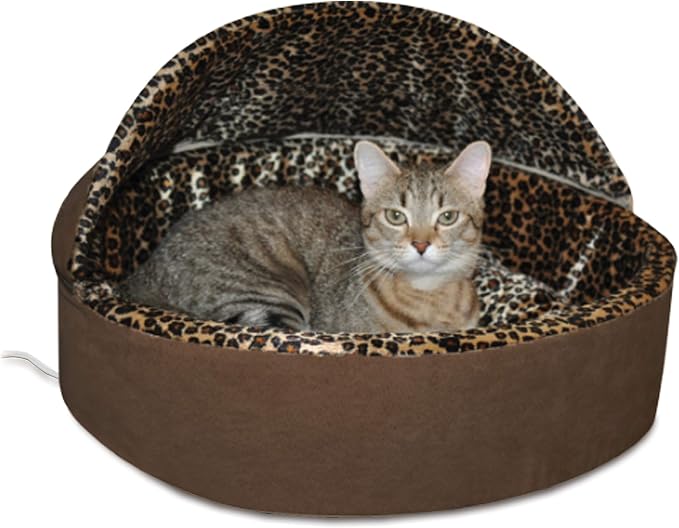 Comfort
K&H Thermo-Kitty Bed Deluxe Heated Cat Bed
Best For: Senior and frail cats with arthritis or cold sensitivity
Material: Soft foam walls, removable low-wattage heater, hooded
Capacity: For cats up to ~15 lb
What We Like
- Gentle warmth soothes stiff, arthritic joints
- Hooded design gives a frail cat a secure den
- Removable heater — usable year-round
- Machine-washable cover for incontinence accidents
What We Don't Like
- Must stay plugged in while in use
- Some cats ignore heated beds at first — give it a week
 Soft Rest
Best Friends by Sheri The Original Calming Donut Cat Bed
Best For: Cats who nest, circle, and want soft, supported rest
Material: Self-warming faux fur, bolstered rim
Capacity: For cats up to ~15 lb
What We Like
- Bolster supports the head and joints without a heater
- Calming, enclosed shape for anxious or hiding-prone cats
- Machine-washable — important for end-of-stage accidents
- Holds up to repeated washing
What We Don't Like
- No active heat — pair with a heated bed in cold rooms
- Large size takes up floor space
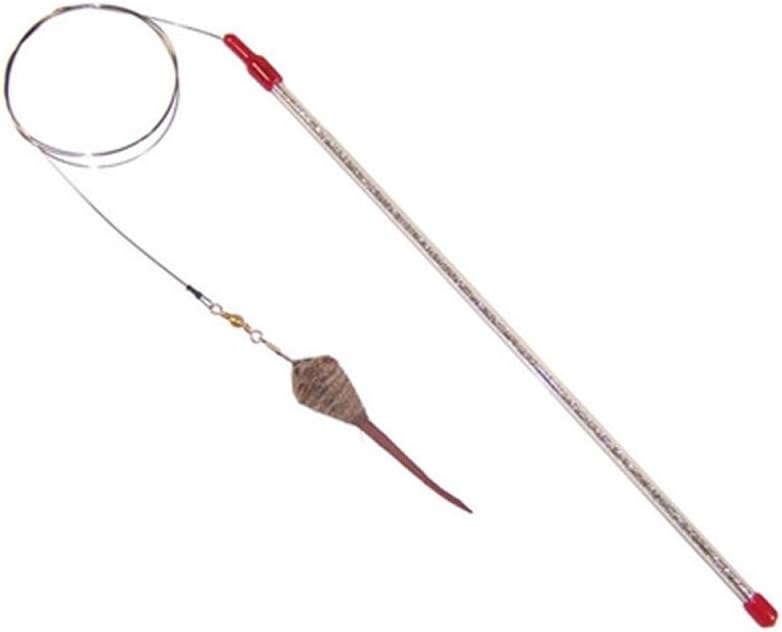 Gentle Play
GoCat Cat Catcher Teaser Wand with Mouse
Best For: Low-effort enrichment for frail or senior cats
Material: Wire wand with small mouse attachment
Capacity: Single-cat play
What We Like
- Tiny prey size suits older cats who ignore big toys
- Lets a frail cat 'hunt' from a resting position
- Short sessions are easy to start and stop
- Inexpensive
What We Don't Like
- Supervised play only — small parts
- Wire can tangle if stored loose
The Conversation with Your Vet
You should not be making this decision alone, and a good vet will not make you. Ask directly:
- “What is her quality of life right now, in your assessment?” — Let a professional who sees this every day give you their read.
- “Is there anything treatable we haven’t tried?” — Pain management, appetite stimulants, fluids. Rule out the fixable before concluding the unfixable.
- “What does the timeline likely look like?” — Days, weeks, or months changes how you plan the time you have.
- “What are your options for euthanasia — in-clinic or at home?” — Many areas now have mobile vets and hospice services (Lap of Love is the largest national network in the U.S.) who come to your home. For a cat who finds the carrier and clinic stressful, this can be a kindness.
What Euthanasia Is Actually Like
Many owners delay out of fear of the process itself. Knowing what to expect removes that fear. The standard procedure at most clinics and home-visit services:
- A sedative first. Your cat is given an injection (usually into muscle) that makes them relaxed and sleepy over 5–15 minutes. They drift off. They are not aware of what comes next.
- The final injection. Once your cat is fully sedated, an IV injection of an anesthetic overdose (pentobarbital) stops the heart, usually within seconds. There is no pain at this stage.
- You can be present. Most services encourage you to hold or sit with your cat. You are not in the way.
Involuntary muscle twitches, a final deep breath, or the eyes staying open are all normal reflexes after passing and are not signs of distress. Your vet will tell you this in advance so it does not alarm you. If you want to be present, say so; if you cannot bear to be, that is a valid choice too, and the staff will treat your cat with care regardless.
Grief, and the Question You Will Ask After
The decision is hard. The days after are harder, in a different way. Two things owners consistently report, worth knowing in advance:
- Guilt is nearly universal and almost always misplaced. You will replay the timing. That is what grief does, not what the facts do. If you used the scale, talked with your vet, and acted out of love, you did it right — even if it does not feel that way for a while.
- The regret that lasts is almost always the “too late” kind. Owners who worried they acted a week early, in hindsight, usually come to feel they acted in time. Owners who waited too long often wish they had been braver sooner. If you have to err, the experience of many before you points one direction.
Frequently Asked Questions
Frequently Asked Questions
How do I know when it's time to put my cat to sleep?
There is no single sign. Veterinarians use a quality-of-life framework called the HHHHHMM scale, which scores your cat from 0–10 on seven factors: Hurt (pain), Hunger, Hydration, Hygiene, Happiness, Mobility, and More good days than bad. Scoring your cat weekly and tracking the trend — and sharing it with your vet — is far more reliable than waiting for a single 'moment.' A falling score, a total below 35 out of 70, or a stretch where bad days outnumber good are all signals to have a serious conversation with your vet about timing.
What are the signs a cat is actively dying?
Signs that the end is close (days to a couple of weeks) include refusing food and water that does not resolve with medication, extreme lethargy where the cat no longer moves to preferred spots, labored or changed breathing, loss of litter box use from weakness, seeking solitude by hiding away, and cold ears and paws as circulation slows. Open-mouth breathing in a cat is always an emergency. Several of these together, in a cat whose quality-of-life scores have been falling, mean it is time to call your vet to discuss timeline.
Will my cat be in pain during euthanasia?
No. The standard procedure starts with a sedative injection that makes your cat relaxed and sleepy over 5–15 minutes — they drift off and are not aware of what follows. Once fully sedated, a final IV injection (typically pentobarbital) stops the heart, usually within seconds, with no pain. Involuntary twitches, a final breath, or the eyes staying open are normal reflexes after passing, not signs of distress. You can usually be present to hold or sit with your cat if you choose.
Should I stay with my cat during euthanasia?
Most veterinary hospice services and clinics encourage you to be present — your cat is calmed by your scent and voice, and many owners find being there helps them process the goodbye. But it is also a valid choice not to stay if you feel you cannot. If you cannot be present, the staff will still treat your cat gently. The decision is yours, and either choice made out of love is the right one.
Is at-home euthanasia an option for cats?
Yes, in most areas. Mobile veterinary hospice services — Lap of Love is the largest national network in the U.S. — come to your home so your cat can pass in a familiar, low-stress place, often in a favorite bed or sunny spot. For a cat who finds the carrier and clinic stressful, at-home euthanasia can be a real kindness. Costs are usually higher than an in-clinic visit, and availability varies by region, so ask your vet or search for mobile end-of-life vets in your area.
What if I'm not ready, but my cat is declining?
This is the most common conflict owners face, and it is worth separating from the medical question. If your cat's quality-of-life scores are still acceptable and bad days are still outnumbered by good, palliative and comfort care — pain medication, fluids, appetite support, warmth, easy access to food and litter — can extend good time, and you should pursue that with your vet. If those tools have stopped working and the trend is clearly downward, the question is no longer whether your cat is declining but how you want the remaining time to look. Acting out of love, with your vet's input, is readiness enough.
The Bottom Line
You will not get a sign that makes this easy, because easy is not available. What is available is a clear framework: score your cat weekly on the seven quality-of-life factors, watch the trend, set a line with your vet in advance, and treat what can be treated. When comfort care stops working and the bad days stack up, the decision you make out of love — even when it aches — is the last kindness you can give.
If your cat is still in her good days, our adopting a senior cat guide covers the setup that makes aging at home easier, and the cat age calculator puts her stage of life in perspective. More care guidance lives in our care guides section.
You will know. Not with certainty, but with enough. And enough is what love has always had to work with.