If you have never pilled a cat before, the internet makes it look like open warfare. It does not have to be. With the right method for your cat’s temperament — and a few safety rules that most how-to guides skip — giving a pill becomes a thirty-second routine instead of a scratch-filled ordeal. This guide covers the four methods vets actually recommend, in the order you should try them: the easy way first, the physical way last.
One thing before the techniques: a cat who needs regular medication is usually a cat with a chronic condition, and owners of senior cats know this routine well. If that is you, our guide to kidney disease in senior cats covers the broader management picture, including what to do when a medicated cat stops eating.
The Safety Rules (Read These First)
1. Ask before you crush. Some pills must never be crushed or split: enteric-coated tablets, extended-release formulations, and certain chemotherapy drugs are designed to release slowly or survive the stomach. Crushing them changes the dose curve — sometimes dangerously. Ask your vet or pharmacist one question: “Can this specific pill be crushed or given with food?” Ten seconds that prevents real harm.
2. Never dry-pill without water afterward. Pills can lodge in a cat’s esophagus instead of reaching the stomach — veterinary imaging studies have shown tablets remaining in the feline esophagus for minutes after pilling, and doxycycline in particular is well documented to cause esophageal inflammation and strictures when it sticks. After every successful pill, syringe 3–5 ml of water into the cheek pouch, or follow with a lick of wet food, to carry it down.
3. Handle bitter meds with gloves or caution. Drugs like methimazole (for hyperthyroidism) can be absorbed through your skin or inhaled as powder when crushed. If your vet flags a medication as hazardous to handle, take that seriously.
4. A cat bite is a medical event. Cat teeth deliver deep, bacteria-loaded puncture wounds — the classic offender is Pasteurella from the cat’s mouth — and a large share of cat bites become infected. Do not let a struggling session escalate to a bite. If you cannot pill your cat safely, that is what the alternatives in Method 4 are for. There is no shame in it; vets would rather reformulate a prescription than treat your infected hand.
5. Stop if the cat is genuinely panicking. Stress raises blood pressure and heart rate, and a terrorized cat remembers. Multiple failed attempts per dose make every future attempt harder. Two calm tries, then switch methods.
Method 1: Hide It in Food (The Easy Way)
Start here. Many cats can be pilled this way — it is zero-stress for everyone when it works, and it is how vets and vet techs dose their own agreeable cats.
The classic vehicle is a pill pocket — a soft, moldable treat with a hollow center — or a small amount of something sticky and strongly scented that is made for cats: a lick of Churu-style puree, a pea-sized pinch of soft cat treat, or a dab of your cat’s own wet food wrapped around the pill. Strong smell matters; it masks the medication’s odor, which is what most cats actually detect. Stick to cat food and cat treats rather than human foods like cheese or butter — most cats are lactose intolerant, and the calcium in dairy can bind tetracycline-class antibiotics such as doxycycline and block absorption. Cat-specific options sidestep both problems entirely.
Technique details that make the difference:
- Offer three un-medicated pieces first. This builds trust and puts your cat in “begging mode” — the fourth piece gets gulped without inspection.
- Use the smallest effective amount of food. A pea-sized wrap gets swallowed whole; a tablespoon gets chewed, and chewed is when the pill gets discovered.
- Check the rules. Confirm with your vet that this medication can be taken with food, and watch to be sure the whole dose went down — some cats eat the wrap and spit the pill onto the floor with impressive precision.
- Feed the pill portion mid-meal, on a partially full stomach, rather than as a standalone offering. Standalone offerings get scrutinized; mid-meal morsels get inhaled.
If your cat eats around the pill twice, do not keep offering the same trick — a cat that has been burned by hidden pills starts inspecting everything. Move to the next method.
Method 2: The Manual Technique (The Standard)
This is the vet-tech method, and it is more about positioning than force. A calm, confident hold beats a strong grip every time.
What you need: the pill, a 3–5 ml syringe of water, a towel, and ideally a second person for your first few sessions.
Step by step:
- Set the stage. Close the door. A cat that flees under the bed has already won. Have the syringe pre-filled and within reach — you will not have a free hand to fill it later.
- The towel wrap (optional but recommended). Wrap your cat in a large towel like a burrito — “purrito” — with only the head out. This neutralizes the claws, which are most of the danger to your hands, and many cats actually settle once wrapped.
- Position. Hold the cat facing away from you, tucked against your body with your non-dominant arm. Scoop the head from above with that same hand, thumb on one side of the jaw, fingers on the other — behind the canine teeth.
- Open the mouth. Tilt the head back about 45 degrees and the jaw drops slightly; apply gentle downward pressure with a finger on the lower incisors if needed. The jaw opens like a hinge — you are not prying.
- Place the pill — don’t throw it. Drop or push the pill onto the back third of the tongue, past the hump where taste buds concentrate. A pill dropped on the front half of the tongue gets foamed out.
- Close and encourage swallowing. Hold the mouth closed, keep the head tilted up, and stroke the throat downward. A lick of the nose or lip is the telltale sign the pill is swallowed.
- Water, immediately. Syringe 3–5 ml of water into the corner of the mouth, or offer a lick of wet food. This is the step that prevents the pill from sitting in the esophagus — do not skip it.
- Release and reward. Let the cat go the moment it is done, and follow with a treat within a minute. The ending is what your cat remembers; make it good.
Practice runs help enormously. Do the full sequence — hold, tilt, open, close, water, treat — with a plain treat fragment as the “pill,” on days when no medication is due. Two or three rehearsals turn dose day from an ambush into a known routine.
Method 3: The Pill Shooter (For Needle-Shy Hands)
If placing a pill directly on a cat’s tongue feels like threading a needle on a moving target, a pill shooter (also called a pill gun or piller) is the tool: a syringe-like device with a soft rubber tip that holds the pill, releases it at the back of the tongue with a plunger press, and keeps your fingers at a claw-safe distance. The technique is Method 2 — the device just replaces steps 5 and 6.
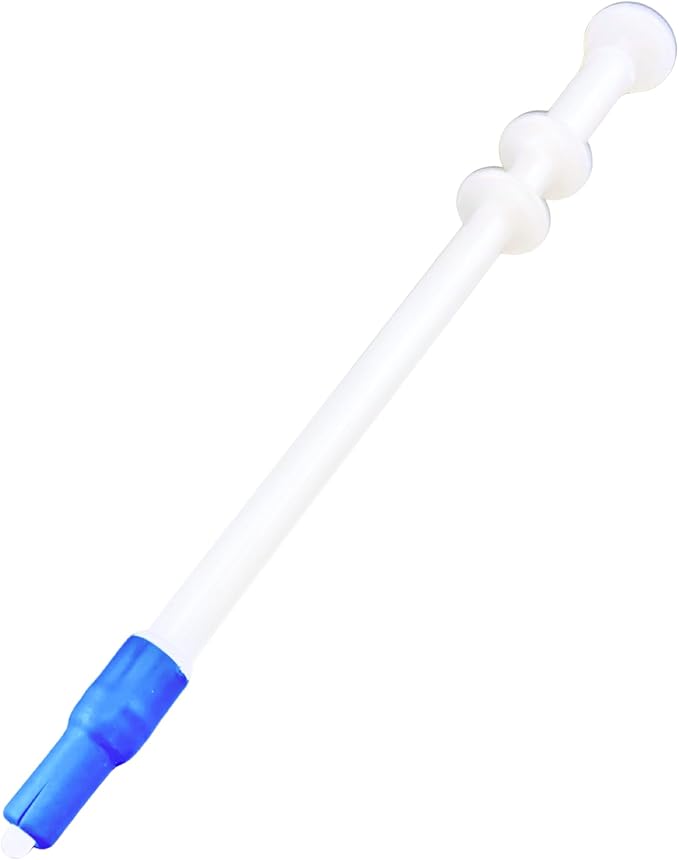 Top Pick
Pill Shooter for Dogs and Cats – Soft Tip Pet Piller
Best For: Owners who struggle with finger placement, small pills
Material: Plastic barrel + soft silicone tip
Capacity: Single-pill dose
What We Like
- Soft tip is gentle on the mouth
- Keeps fingers clear of teeth
- Simple plunger release
- Works with cats and small dogs
- Easy to rinse clean
What We Don't Like
- Takes practice to load and aim one-handed
- Some cats object to the barrel shape
- Quality control mixed in reviews
The soft-tip pill shooter is our tool pick for one reason: it converts the hardest part of the manual technique — accurate pill placement on a moving tongue — into a single press. Load the pill into the soft rubber cradle, position at the back of the tongue, press the plunger, done. The silicone tip is far kinder than the hard plastic of cheap alternatives, which matters if your cat needs daily medication for months.
Its limitation is real: you still need the towel wrap and the head position from Method 2. The shooter is an accuracy upgrade, not a magic wand. Practice with an empty cradle and a treat reward before the first real dose.
Method 4: Make the Medication Easier (The Smart Way)
When Methods 1–3 all fail — or when daily pilling is straining your bond with a chronically ill cat — talk to your vet about formulation alternatives. Veterinary medicine has more options than most owners realize:
- Flavored compounded liquids. A licensed compounding pharmacy can turn many tablets into fish- or chicken-flavored suspensions dosed by oral syringe. Cats that fight tablets often accept a flavored liquid squirted into the cheek with minimal fuss. (If your pet takes compounded medication, it is worth periodically checking our pet recall checker — compounded medication recalls do happen, and the lot lookup matters more when the product is custom-made.)
- Transdermal gels. Some medications, most notably methimazole for hyperthyroid cats, can be formulated as a gel rubbed into the inner ear. Absorption is less reliable than oral dosing and requires periodic bloodwork to confirm levels, but for the truly unpillable cat it transforms treatment from a daily battle into a five-second ear rub.
- Long-acting injections. For certain conditions, vets can administer medication as an injection lasting days to weeks. Ask whether your cat’s prescription has a depot form.
- Different tablet sizes or scoring. Sometimes the problem is mechanical — a huge tablet — and a double-scored smaller tablet or half-doses given twice daily changes everything.
A word of caution on buying compounded medications: use a vet-referred, licensed compounding pharmacy rather than the cheapest online listing, and verify lot numbers against recall notices. The FDA’s recall announcements and our recall checker are the two places worth knowing.
Supporting Tools Worth Having
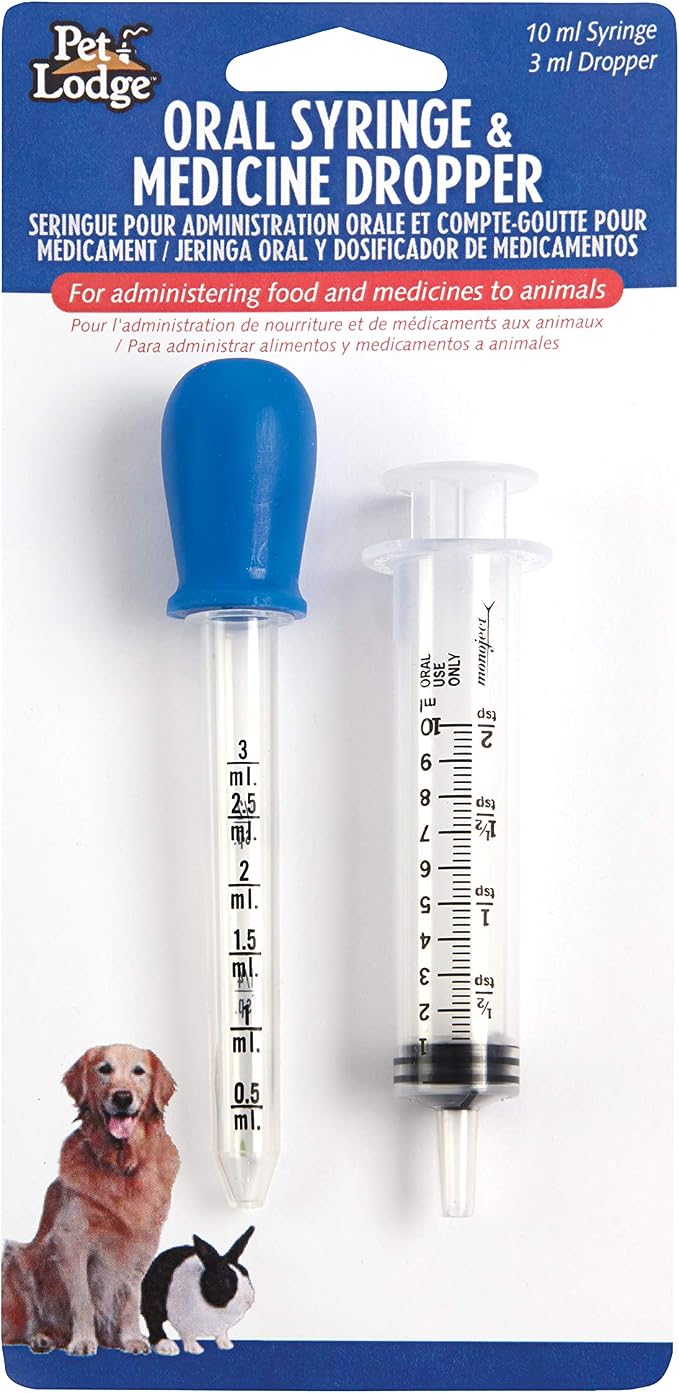 Essential Companion
Pet Lodge Oral Syringe & Medicine Dropper for Animals
Best For: Water after pilling, liquid medications
Material: BPA-free plastic barrel
Capacity: 10 ml, multiple sizes
What We Like
- Clearly marked dosing lines
- Smooth plunger for one-handed use
- Inexpensive multi-pack
- Right size for the water-after-pill step
- Suitable for liquid meds and fluids
What We Don't Like
- Single-use orientation — wash thoroughly between meds
- Tip firmness varies by size
- Cats may need the cheek-pocket technique first
A dose syringe earns its place in every cat household before you need it. Its starring role is the water chaser after every manually-administered pill — the esophagus-clearing step vets consider non-negotiable — and it doubles as the delivery tool for compounded liquids. Buy the 3–5 ml size for water chasers; the larger sizes suit liquid medications. Tip it into the corner of the mouth, behind the canine teeth, aiming at the cheek pouch rather than straight back at the throat, and depress slowly.
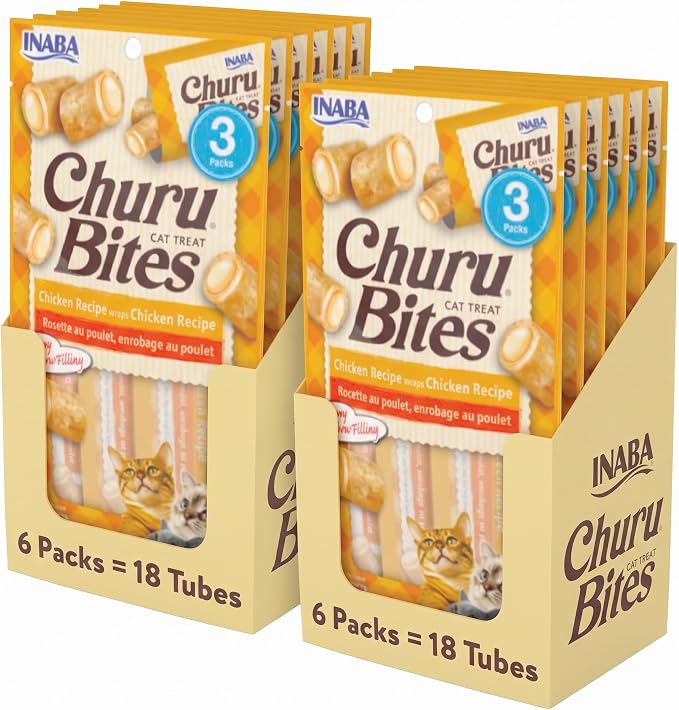 Best Reward
INABA Churu Bites for Cats (Soft Baked, Chicken)
Best For: Rehearsals, rewards, masking small pills
Material: Soft baked chicken treat with Churu filling
Capacity: ~10 treats per pack
What We Like
- Intensely aromatic — high acceptance rate
- Soft texture can pinch around a small pill
- Perfect reward immediately after pilling
- Low calorie per piece
- Useful for practice runs with no medication
What We Don't Like
- Only masks very small pills
- Strong smell means committed chewers may find the pill
- Treats dry out if the pack is left open
Never underestimate the post-pill reward. Whatever treat your cat considers currency — and aromatic soft treats like these are currency for most cats — give it within a minute of every successful dose, every time. You are training the ending of the routine, and a cat that learns “pill then treat” stops treating pill time like an ambush. These soft bites also pinch effectively around the smallest tablets when a pill pocket is unavailable.
Putting It Together: A Sample Dosing Routine
For a daily medication, consistency beats cleverness:
- Same time, same place, same person. Predictability lowers your cat’s guard.
- Gather everything first: pill, syringe of water, towel, treat. A mid-session search for the syringe is how cats escape.
- One calm attempt at Method 1 (hidden in food). Success? Done — just confirm the whole dose went down.
- If refused, Method 2 or 3 with the towel wrap. Two tries maximum.
- Water chaser, release, treat. Always in that order.
- If two physical attempts fail, stop. Call your vet about Method 4 alternatives rather than escalating a fight neither of you will win.
Frequently Asked Questions
Frequently Asked Questions
Can I crush my cat's pill and mix it with food?
Sometimes — but ask your vet or pharmacist first, because enteric-coated, extended-release, and certain other medications must never be crushed. If crushing is allowed, use a tiny amount of strong-smelling, sticky cat food (a lick of Churu-style puree or your cat's favorite wet food) so the whole dose is consumed, and confirm your cat eats every bit. Avoid human dairy foods like cheese or butter — most cats are lactose intolerant, and dairy calcium can block absorption of tetracycline antibiotics. Never handle crushed hazardous medications like methimazole with bare hands.
What do I do if my cat spits the pill out?
Stay calm and give it one more try with better placement — deeper on the tongue, mouth held closed longer, water chaser immediately after. If the pill has been partially chewed or contaminated with saliva and food, check whether the coating matters before redosing (call your vet or pharmacist if unsure). If your cat consistently foams pills out, switch methods rather than repeating the same failure.
Why does my cat foam at the mouth after getting a pill?
Mostly taste and texture, not danger. Bitter pills trigger profuse salivation and lip-smacking that looks alarming but is a normal reaction. Placing the pill deeper on the tongue, following with water or a food chaser, and finishing with a flavored treat minimizes it. True trouble signs — facial swelling, hives, or breathing difficulty — are allergic reactions and are emergencies, but these are rare.
How do I give a cat a pill by myself without help?
The towel-wrap Method 2 works solo: wrap first, tuck the cat under your non-dominant arm facing away, control the head from above, dose with your free hand, and have the water syringe pre-filled and standing within reach. Many owners also find the pill shooter makes one-person dosing much easier. Do a few rehearsal sessions with treats so neither of you is improvising on dose day.
My cat needs medication for life. What if pilling keeps failing?
Talk to your vet about formulation alternatives — compounded flavored liquids, transdermal gels rubbed into the ear (available for drugs like methimazole), or long-acting injectable forms. Chronic conditions like hyperthyroidism and kidney disease are exactly the situations where compounding pharmacies earn their keep, and a sustainable daily method matters more than any single technique.
Is it safe to give my cat medication meant for humans?
Only if your veterinarian specifically prescribes it with feline dosing. Many common human medications are toxic to cats at surprisingly small doses — acetaminophen (Tylenol) can be fatal to a cat from a single tablet, and ibuprofen and naproxen are dangerous as well. Never improvise; 'human medicine, smaller dose' is how emergency vet visits happen.
The Bottom Line
The hierarchy is simple: hide it if you can, hold-and-place it cleanly if you cannot, use a tool when your fingers are the bottleneck, and reformulate when the daily battle is costing you the relationship. Whatever method wins, two habits separate success from struggle: a syringe of water after every manual pill, and a treat after every dose. Master those two details and pilling becomes just another thirty seconds in your cat’s day.
Related reading: Kidney disease in senior cats · Senior cat pain signs: what to watch for · When to say goodbye to a senior cat · Pet recall checker: verify your pet’s food and medications