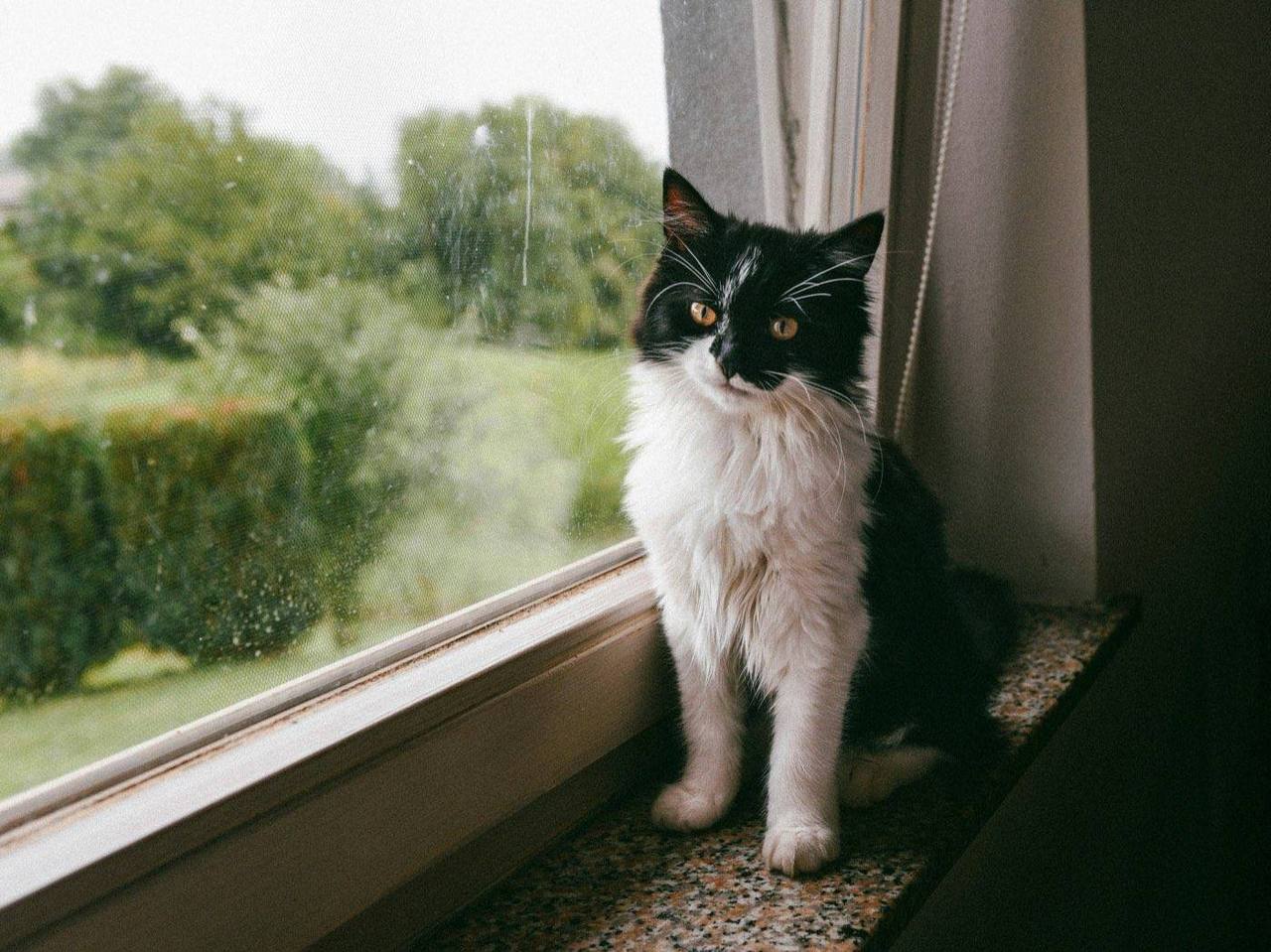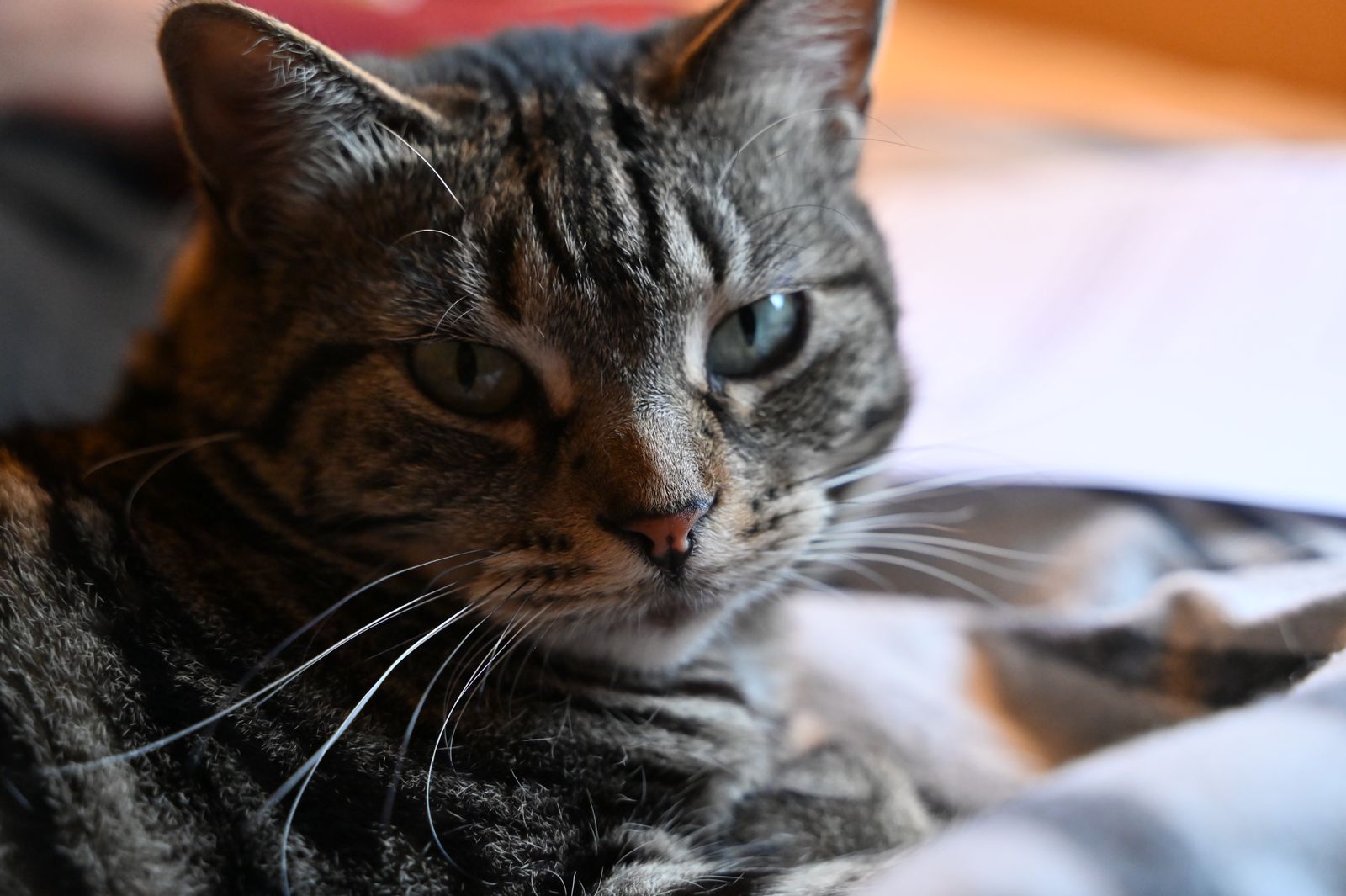
Somewhere right now, a 14-year-old cat is sitting on the floor next to the bed she has jumped onto every night for a decade, looking up at it. She is not “being cute.” She is calculating whether the jump still costs what it used to — and she will never limp, never cry, and never explain.
That is the central problem of senior cat pain: cats are descended from solitary hunters who could not afford to advertise weakness, and they have kept the policy. Chronic pain in cats almost never looks like the groaning, limping, listless pain we learned from dogs. It looks like slightly different behavior — behavior easy to file under “just getting old.”
The scale of the missed problem is well documented. The most-cited study (Hardie et al., JAVMA 2002) found radiographic evidence of degenerative joint disease in roughly 90% of cats over age 12; a later study of cats over six found arthritic changes in 61% of them — and only 13 of those 100 owners reported ever noticing a limp. The pain is there; the signals are just quiet.
The good news is that the signals are also learnable, and effective treatments exist now that did not exist a few years ago. This checklist is built from the 2022 AAHA/AAFP pain management guidelines (the joint veterinary standard, updated after a 15-year gap), Cornell’s feline arthritis materials, and the behavior-change research behind how cats actually express chronic pain — then organized the way you observe your cat at home: jumping, grooming, the litter box, temperament.
Why Limping Is the Wrong Thing to Watch For
When most people picture an animal in pain, they picture a limp. Dogs deliver that signal. Cats usually don’t, for two structural reasons.
First, feline arthritis hits both sides of the body roughly evenly — hips, elbows, both knees. A symmetric problem produces no gait to notice; the cat doesn’t favor a leg because both legs are stiff. Second, cats compensate brilliantly until they can’t: muscle mass, flexibility, and sheer determination hide joint disease for years after the X-ray would show it.
| What you imagine | What senior cat pain actually looks like |
|---|---|
| Limping or holding up a paw | Hesitating at the edge of the bed before jumping |
| Crying or yowling when moving | Sleeping in lower, easier spots than last year |
| Obvious weakness or collapse | A coat that’s gone slightly scruffy over the lower back |
| Refusing to eat or move entirely | Peeing just outside the litter box “by accident” |
That right-hand column is what the rest of this article is about. None of these signals scream “pain” in isolation — which is why the checklist format matters. One soft signal is noise; three of them together is a pattern, and the pattern is what you take to the vet.
The 12 Signals, Zone by Zone
The veterinary guidelines describe chronic feline pain through behavior, not gait. Here are the twelve observations that carry the most weight, grouped by where you’ll notice them.
Around jumping and movement
- The hesitation pause. Your cat stops at the base or edge of a jump she used to make without thinking — a half-second calculation before committing. This is often the first thing to change and the easiest to miss, because the jump still happens.
- Retired heights. The windowsill, the top of the cat tree, the counter — claimed for years, then quietly abandoned. Cats don’t announce the retirement; the spot just stops being visited.
- Stairs become a question. Pausing midway, taking stairs in an odd rhythm, or — the classic — starting to walk down stairs that were always jumped down. Descending is harder on arthritic joints than climbing.
- Stiffer get-ups after sleep. Slow, deliberate rising from a nap, sometimes with a stretch that looks more careful than luxurious. Arthritic joints are worst after rest.
Around the litter box
- Misses and near-misses. Peeing or pooping just outside the box, or in a spot that’s easier to get into than the box. Arthritic hips make high-sided boxes genuinely difficult to climb into, and the cat is not being spiteful — she’s solving a mobility problem.
- Perching instead of posturing. Pooping while balanced on the edge of the box rather than squatting properly, because crouching hurts. Watch for it; it’s unmistakable once you know to look.
- New constipation. Cats who avoid the box because it hurts to get in start holding stool, which compounds. A senior cat with recurring constipation and a high-sided litter box has a furniture problem before a digestive one.
Around the coat and claws
- The scruffy lower back. Cats groom by bending, and the lower back — exactly where feline arthritis concentrates — is the first place they can’t reach. Matted, oily, or flaky fur above the tail base is one of the highest-value signals in this whole list, and it photographs beautifully at vet visits.
- Overgrown claws. Claws get short through scratching and through grooming that pulls at the sheds. A cat whose nails start clicking on the floor, or who grows thick hooked claws on the back paws in particular, has stopped doing full-range maintenance. Back claws are the tell — they’re the ones that need the bend.
- Over-grooming a specific joint. The opposite failure mode: licking one hip, knee, or forearm until the fur thins to baldness. Pain can be itchy-adjacent; a symmetrical bald patch over one joint is a flag, not a habit.
Around temperament and routine
- Irritability at specific touches. A cat who growls, swats, or moves away when stroked over the lower back or hips — but is fine elsewhere — is localizing her own pain for you. Often described by owners, heartbreakingly, as “she’s gotten grumpy in her old age.”
- The quieter life. Sleeping noticeably more, playing less, skipping the 4 a.m. hallway sprints, greeting you at the door less, hiding more. None of these is specific — every serious senior-cat condition produces them — but together with any signal above, they shift the odds substantially.
The “Just Getting Old” Trap
Here is the sentence this article exists to retire: “She’s just slowing down because she’s old.”
Aging is not a disease, and “old” is not an explanation — it’s a category in which explanations hide. Slowing down has causes, and in senior cats the top candidates — arthritis, dental pain, kidney disease, hyperthyroidism, high blood pressure — are all things that are either treatable, manageable, or at minimum worth naming. Pain specifically responds to intervention at almost any age, which means the difference between “old” and “in pain” is often the difference between a cat who endures her days and one who enjoys them.
The trap has a second layer: because cats hide pain, the absence of complaint reads as the absence of pain. Owners report “no signs” with complete sincerity while the X-rays say otherwise. If your mental model of a suffering cat was built on dogs or on people, recalibrate it — our cat body language guide covers how much cats say with posture and stillness instead of sound.
There’s also a timing reason to push past the trap: the same “just old” dismissal applied to weight loss, drinking changes, or litter habits can mask kidney disease and hyperthyroidism, which have real treatment windows. If you’re sorting “what’s normal” from “what needs a vet” more broadly, the senior cat adoption guide has a dedicated normal-aging-versus-call-the-vet breakdown, and our guide to a cat straining to pee covers the urinary end of that spectrum, where some situations are same-day emergencies.
The Two-Minute Jump Test
If you take one diagnostic habit from this article, take this one: once a month, quietly watch your cat jump onto something waist-height.
You’re not testing whether she can do it — you’re watching the quality of the motion. Four things count as findings:
- A pause longer than a breath before committing
- A push-off that uses only the front legs (hind legs “opt out” early when hips hurt)
- A landing that is heavy, flat-footed, or followed by a stiff re-set
- Choosing to go around, or finding a lower staging point, when a direct route exists
Repeat on the way down. Cats with joint pain manage upward jumps by power and downward jumps by caution — the descent is where they stop trusting their legs. The jump test is also the single best way to measure whether whatever you and your vet do is working, because “she seems better” is vague but “the hesitation pause is gone” is not.
While you’re watching, watch the litter box entrance the same way. Entry height is the most underestimated piece of senior cat furniture in existence — and one of the easiest to fix.
What a Vet Can Actually Do Now
This is where the story has genuinely improved. An owner who last heard “arthritis — not much to do for cats, I’m afraid” a decade ago is working from outdated information. What a workup and treatment plan look like today:
Diagnosis. History (bring this article’s checklist — it’s the same language the vet uses) plus orthopedic exam plus X-rays of the affected joints. Radiographs also rule out the mimics: injuries, bone cancer, luxating patellas.
Weight management. The least glamorous and most powerful lever. Every extra gram is load on hips and elbows that are already inflamed, and fat tissue itself secretes inflammatory compounds that make joint pain worse. In our piece on why some cats live to 20, lifelong leanness was the strongest signal in long-lived cats — joint comfort is one of the reasons why.
Medication — with a strict rule. Veterinary NSAIDs like meloxicam and robenacoxib are effective and, at carefully controlled doses, usable in cats — but the dose, frequency, and monitoring are the vet’s job, not yours. And the rule that has no exceptions: never give a cat any human pain medication. Acetaminophen (Tylenol) is outright lethal to cats even in small doses — it destroys their red blood cells — and ibuprofen and naproxen are toxic at far lower doses than you’d guess. Our acetaminophen toxin page covers the emergency details; if a dose has already happened, that’s a poison-hotline call, not a watch-and-wait.
Solensia. The genuinely new option. Frunevetmab (brand name Solensia), FDA-approved in January 2022, is a monthly injection given at the clinic — a monoclonal antibody that neutralizes nerve growth factor, the signaling molecule that carries osteoarthritis pain. In the U.S. field study behind the approval, 77% of cats showed improvement in at least one owner-observed measure of mobility or comfort. It is not for every cat — per the FDA label it must not be used in breeding, pregnant, or lactating cats, and it needs monitoring — but for cats who can’t take NSAIDs, which includes many cats with kidney disease, it changed the conversation.
Adjuncts. Gabapentin is the best-supported add-on for chronic feline pain, useful at night or before known-stressful events. Joint supplements (glucosamine/chondroitin, omega-3s) have weaker but plausible evidence — worth discussing as a supporting player, not a headline. And heat is one of the few interventions with immediate, visible effect on stiff joints, which brings us to the gear.
Home Changes That Do the Heavy Lifting
Vet visits treat the pain; the apartment treats the cat. A senior cat with arthritis spends 20+ hours a day in your home, so the environment does most of the compounding — in either direction. These three products earn their place by addressing the three highest-frequency pain moments in a senior cat’s day: resting, toileting, and moving around at all.
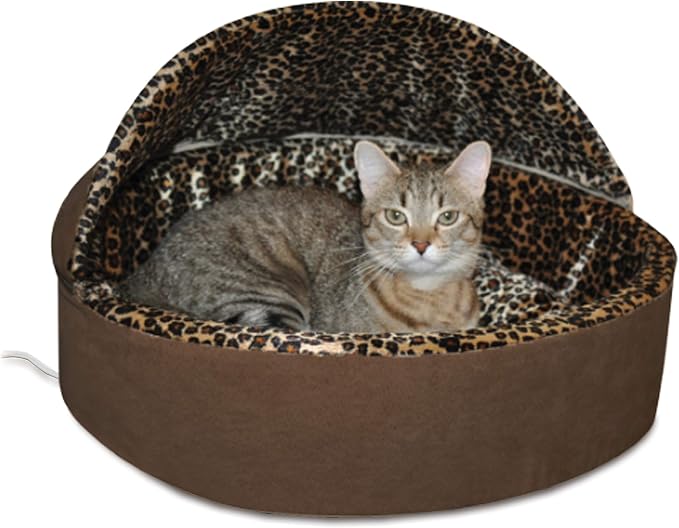
K&H Thermo-Kitty Bed Deluxe Heated Cat Bed
Best For: Arthritic cats who seek warmth after sleeping
Material: Soft plush with removable, washable cover
Capacity: Suitable for cats up to ~20 lbs
What We Like
- Warms only when in use (thermally controlled, safe design)
- Gentle sustained heat eases stiff joints at rest
- Bolstered rim doubles as a head and neck support
- Removable, machine-washable cover
What We Don't Like
- Cats that avoid covered spaces may prefer the open version
- Cord needs positioning out of chew range
Heat is the cheapest analgesic in existence and the one cats self-select for — every owner of an old cat has watched them colonize radiators, laptops, and fresh laundry. A thermostatically controlled heated bed gives stiff joints a warm place to rest all night, which is exactly the period when resting joints are at their stiffest.
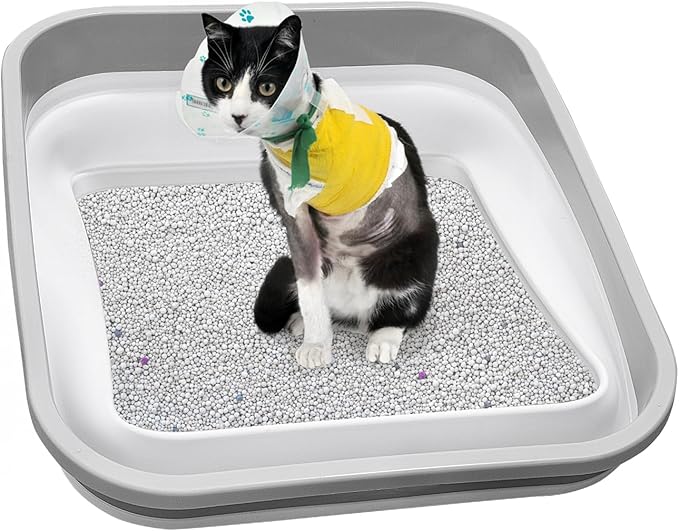
Maohegou Senior Cat Litter Box (Low Entry)
Best For: Cats with hip or elbow arthritis who miss the box
Material: PP plastic with high walls and low front entry
Capacity: Extra-large interior; suits cats 15 lbs+
What We Like
- Low front entry solves the step-over problem that causes misses
- High back and side walls contain litter kick-back
- Spacious interior lets the cat posture comfortably
- Smooth surfaces, easy to sanitize
What We Don't Like
- Larger footprint than a standard box
- Enclosed feel may not suit every cat
The low-entry box solves signal #5 and #6 at the source. If your cat’s litter misses started in seniorhood — rather than being a territorial or stress pattern — this is usually the highest-return purchase on this page, and it’s dramatically cheaper than carpet cleaning.
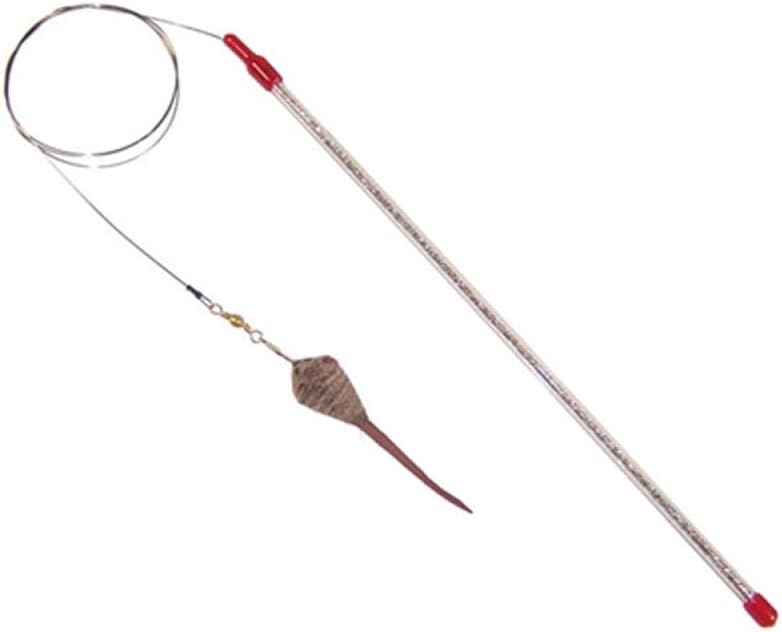
GoCat Cat Catcher Teaser Wand with Mouse
Best For: Low-impact daily play that keeps stiff joints moving
Material: Carbon fiber wand, genuine fur mouse
Capacity: Approx. 22 in reach
What We Like
- Light enough to play slow and *low to the ground*
- Keeps joints working without any jumping
- Triggers real prey-drive sequences
- Replaceable mice available
What We Don't Like
- Fur may not suit every owner
- Wand tip can fray after heavy biting
Movement is medicine for arthritic joints — cartilage has no blood supply and feeds through motion — but nobody told the cat. A wand dragged slowly along the floor turns the daily joint-maintenance lap into a game she’ll actually play, at elderly-cat speed.
Beyond products, the free version of the same logic: a step stool or ottoman as a “staircase” to the bed, food and water on every floor the cat uses (less stair traffic), and — one more time — a litter box on each floor, because the box downstairs might as well not exist to a cat with sore hips who lives upstairs now.
When Pain Isn’t Arthritis
Arthritis is the most common chronic pain in senior cats and the one this checklist targets, but it is not the only one wearing the same disguise. Two are worth naming because they change what you’d tell the vet:
- Dental pain. By age three, most cats already have some level of periodontal disease — the 2019 AAHA dental guidelines’ own phrasing — and cats hide oral pain as completely as joint pain. The overlapping signals: chewing on one side, dropping kibble, head-shaking at the bowl, and the scruffy coat (mouth pain strikes grooming too). Our long-lived-cat article covers the dental-kidney connection in detail.
- Internal pain. Pancreatitis, constipation, and urinary disease produce a hunched, restless, can’t-get-comfort presentation rather than mobility changes. And one of them is a hard emergency: a cat — especially a male cat — who is straining in the box, producing nothing, or crying there needs the vet today, not this week. That’s the straining-to-pee guide’s whole subject.
The practical sorting rule: mobility-shaped changes (jumping, grooming reach, box entry) point toward joints; posture-shaped changes (hunching, restlessness, retreat-then-return) point inside. Either way, the destination is the same appointment — just describe the shape accurately when you book it.
The 10-Minute Monthly Senior Cat Check
Everything above compresses into a routine that costs ten minutes a month and makes you the person who catches this stuff early:
- Watch two jumps and one descent. Counting hesitation, push-off, landing quality. (Two minutes)
- Hands along the spine and hips. Light pressure; note flinching, skin twitching, or a tail that drops. (One minute)
- Check the claws. Clicking on hard floors? Back claws growing thick or hooked? (One minute)
- Inspect the coat above the tail. Oily, matted, or dandruffy lower back — yes or no. (One minute)
- Review the litter box week. Misses, perching, deposits just outside — and when the pattern started. (Two minutes)
- Compare against last month. Better, worse, same. If worse, or if two or more signals are present for the first time, book the appointment — and bring the list.
Cats age faster than we calibrate for: by the cat-years conversion (or the age calculator if you want the exact figure), a 12-year-old cat is already living her early 60s in human terms. Monthly checking is how you find the quiet stuff while it’s still cheap and comfortable to fix.
Frequently Asked Questions
Frequently Asked Questions
How can I tell if my senior cat is in pain?
Watch behavior, not limping — cats almost never limp with chronic pain. The highest-value signals are: hesitation before jumps, abandoned favorite heights, a scruffy or matted coat over the lower back, overgrown back claws, new litter box misses, and irritability when touched over the hips or spine. Any two of these together is a vet-visit signal, not an aging observation.
Do cats purr when they're in pain?
Yes — and this surprises many owners. Cats purr both when content and when self-soothing through stress, injury, or pain, so purring is not evidence of comfort. A cat purring while hunched, hiding, or refusing to move is more likely soothing herself than telling you she's fine.
Can I give my cat aspirin, ibuprofen, or Tylenol for pain?
No — never. Acetaminophen (Tylenol) is lethal to cats even at small doses because it destroys their red blood cells, and ibuprofen and naproxen are toxic at doses far below what people take. Cats also lack the liver pathways to clear most human painkillers. Pain control for cats is a prescription matter; if your cat has already swallowed a human medication, contact a poison hotline or an emergency vet immediately.
Does arthritis shorten a cat's life?
Indirectly, and partly preventably. Arthritis reduces activity, which drives weight gain, which worsens both the arthritis and the diseases that actually shorten lives — diabetes and kidney strain. The bigger cost is quality of life: an untreated arthritic cat sleeps more, plays less, and interacts less for years. Treated cats routinely get their jump, their games, and their personality back.
What age is a cat considered senior?
Most veterinary bodies consider cats senior around 10 and geriatric past 15 — the 2021 AAHA/AAFP life stage guidelines put senior at over 10 years. If you want your own cat's equivalent human age, the cat age calculator converts it in seconds — a 10-year-old cat is around 53 in human terms, which is when the 90%-of-cats-over-12 statistic starts approaching fast. Monthly checks should start by then at the latest.
My cat acts completely normal at the vet. How is the vet supposed to see the pain?
Often they can't on exam day — cats in clinics run on adrenaline and present their best selves, which is why vets increasingly weight owner video and history over the office exam. Record the jump test on your phone, photograph the scruffy lower back and the overgrown back claws, and describe the litter box pattern with dates. You are the diagnostic instrument that sees the cat's real life; the exam confirms what you bring in.
The Bottom Line
Senior cats do not limp, complain, or ask for help — they quietly rearrange their lives around pain, one abandoned windowsill at a time. The twelve signals in this checklist are how that rearrangement looks from the outside, and none of them require a vet’s eye to notice. They require only that someone watches.
Start with the jump test this week — two minutes, once. If the hesitation pause is there, you have found the thing early, while heat, a low-entry box, weight management, and now even a monthly injection can give your cat years of comfortable, mobile life back. That is the entire deal of senior cat ownership: they hide it; you watch for it; and when you catch it, the ending is nowhere near as close as it felt.
More in this cluster: what senior actually means when you’re adopting a senior cat, the five habits behind cats that live to 20, and — when the time eventually comes, much later than it would have without this care — how to think about saying goodbye.